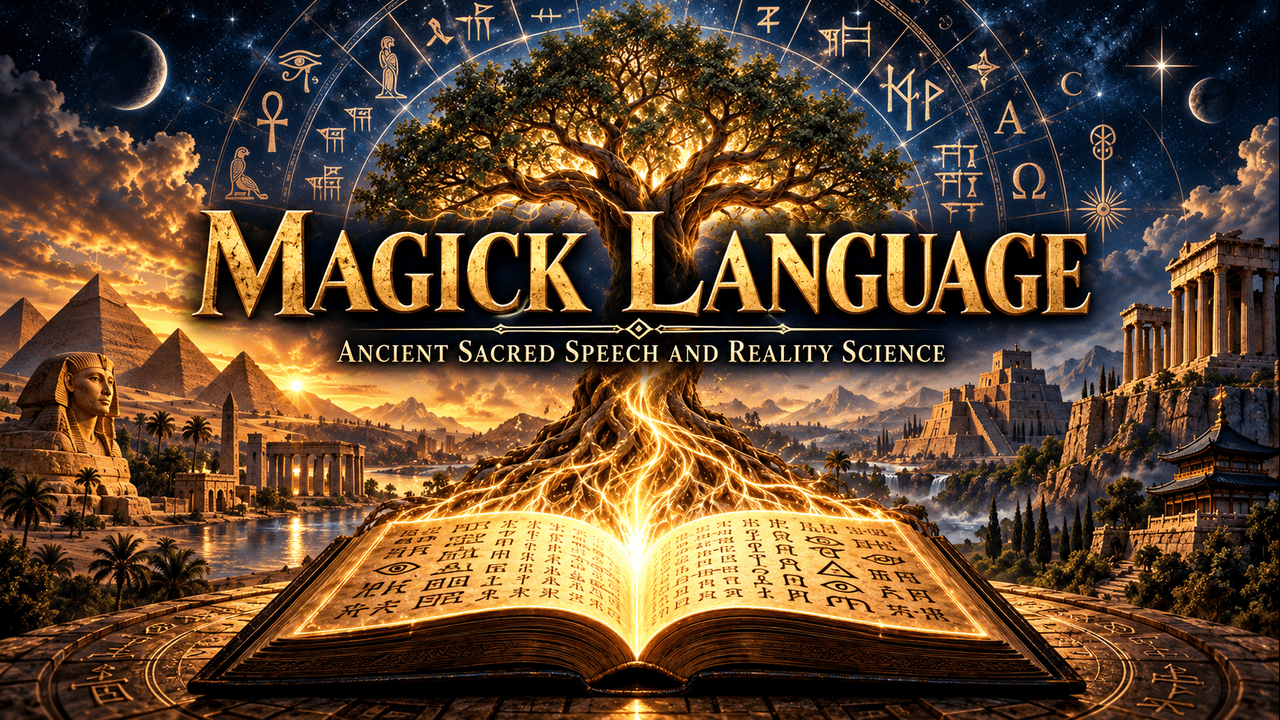
Magick Language and the Questions Behind the Book
Download Free Via the 3 Dots
The distinction matters. A book that treats ancient people as gullible cannot explain why their written and oral systems were maintained for centuries. A book that treats every old ritual instruction as proof of an undiscovered force cannot distinguish successful predictions from inherited belief. Magick Language deserves a more demanding treatment. We can reconstruct what a source says, examine how its language was used, identify plausible mechanisms, and design tests for claims that extend beyond the documented record. That approach respects ancient intellectual labor while giving the modern reader a practical way to separate history, interpretation, and experiment.
What Readers Will Find in The Magick Root of Language
The opening portion of the book asks what can actually be known about the first human voice. Speech itself leaves no inscription in the landscape, and the first surviving writing does not reveal the first spoken language. Fossils, anatomy, genetics, archaeology, and modern linguistic theory provide indirect evidence about the development of language abilities. No method can reconstruct a particular prehistoric conversation or assign a certain date to the first sentence. The early chapters therefore establish a method: do not mistake the earliest attested writing for the beginning of speech, and do not present a myth about original words as though it were a dated archaeological discovery.
The next movement examines the invention of external symbols, the authority of names, and the transition from spoken communication to writing. In the Mesopotamian chapters, attention turns to Sumerian and Akkadian texts, the scribal profession, divine decrees, incantations, and the preservation of an older language in later scholarly culture. The Egyptian chapters consider heka, sacred names, ritual utterances, hieroglyphic writing, the relationship of script to religion, and the long movement through hieratic, Demotic, and Coptic. These examples show that a sacred tradition may survive after everyday speech changes. They also show why the word disappearance is often too blunt: a language, a script, a priesthood, and a body of ritual knowledge can have different historical fates.
The middle and later chapters expand the comparison to the Indus signs; Sanskrit and Vedic recitation; Avestan; Hebrew; Greek; Latin; Chinese ritual writing; Germanic runes; Celtic poetry and ogham; and selected traditions beyond Eurasia. The book then asks who controlled sacred language, how authority traveled through manuscripts and schools, and what conquest or conversion actually altered. Its final section examines the Germanic ancestry of English, Norman influence, standardization, the modern Anglish idea, and an experimental way of testing deliberate word design. A glossary and research bibliography close the study. Readers should treat it as an interpretive manuscript and research starting point, not a substitute for primary editions or a completed experimental demonstration.
Why the First Spoken Language Cannot Be Recovered
A frequent search for a Magick Language begins by asking for the oldest possible word. That sounds straightforward, but it confuses several very different kinds of antiquity. The oldest preserved written occurrence of a word is not its moment of invention. A root reconstructed for an ancient language family is not necessarily older than every word outside that family. A modern word that sounds like an ancient divine name may owe its resemblance to chance rather than inheritance. Written evidence appears comparatively late in human prehistory, long after people had developed elaborate ways of sharing knowledge and coordinating work.
Language researchers use different forms of evidence to investigate this gap. Anatomical findings illuminate possible speech production. Genetic research helps study abilities related to language but has not identified a single gene containing an ancient vocabulary. Archaeology reveals complex tools, symbolic artifacts, long-distance exchange, and other traces of collective behavior. Comparative linguistics reconstructs earlier stages of documented language families by examining regular correspondences in sound and grammar. None of these methods can produce an authenticated first word, a universally shared prehistoric syllable, or the original name of nature itself. The responsible answer is not that human speech had no beginning, but that its beginning is beyond direct documentary recovery.
This limitation is useful when investigating Magick Language and its supposed oldest roots. It prevents a modern interpreter from choosing a preferred language and declaring its words the untouched code of the species. It also focuses attention on better questions. When did specialists record ritual formulas? How carefully were they copied? Which words were reserved for particular situations? Could recitation organize attention and memory? Once the evidence becomes specific, the study becomes more interesting. We move away from the untestable claim that one language secretly underlies every civilization and toward the documented diversity of human speech and symbolic action.
Symbols, Writing, and the History of Magick Language
A painted mark, an engraved motif, and a written sentence are not the same kind of evidence. Some ancient signs may indicate identity, quantity, ownership, social position, or ritual association without encoding the sounds of language. A sequence of marks can be meaningful while remaining undeciphered. That fact is important when discussing prehistoric art and the Indus material. Recognizing a familiar modern letter shape in an old artifact does not establish that the object carries the modern letter’s sound or meaning. Similar forms may arise independently because lines, circles, forks, and intersecting strokes are easy shapes for human hands to make.
Writing systems developed different solutions for representing speech. Cuneiform signs could function in logographic or phonetic ways depending on context. Egyptian hieroglyphic writing combined phonetic signs with other signs that could identify words or clarify categories. Later alphabets made different choices about which speech units to represent. There is no single inevitable progression in which all societies first drew pictures and then improved them into a modern alphabet. Scripts changed through contact, education, media, convenience, and institutional use. A culture might maintain one script for monumental display and another for everyday documentation without thereby dividing reality into two incompatible kinds of language.
For a study of Magick Language, the technical distinction between symbol, sign, sound, and meaning is essential. Suppose a modern researcher assigns one psychological function to each letter of an alphabet. That mapping is a designed system and may be evaluated as such. It does not become an ancient discovery simply because selected signs resemble prehistoric engravings. A credible historical claim needs a sequence of dated witnesses, stable readings, and an explanation of alternatives. A credible experimental claim needs a measurable effect. The fascination of symbols is no reason to loosen either standard.
The Sumerian Example: Writing, Divine Order, and Professional Knowledge
Sumerian literature offers a major foundation for the book because its texts preserve sophisticated religious and literary thinking in a very early written language. Accounts of gods organizing the world, authorizing offices, or distributing powers connect speech with order. The Sumerian concept often represented as the me appears in discussions of divine powers, functions, and institutions. Its significance must be examined in the literary setting of each text. Treating every me as a separable spoken energy or modern software command replaces historical complexity with an appealing analogy. The comparison may inspire a hypothesis, but it cannot serve as its evidence.
For Magick Language research, the most instructive historical fact is that Sumerian remained culturally important after it ceased to function as a widespread everyday spoken language. Later scholars studied inherited literary texts, lexical lists, hymns, and ritual materials. Bilingual environments and scribal education could preserve formulas that ordinary speakers no longer used in daily conversation. This is one of the clearest cases against the simple narrative that a sacred language was either alive or deliberately destroyed. It could be transformed into a learned specialist tradition. That transformation altered the kind of authority the language carried, but it also protected material that might otherwise have disappeared.
Anyone who wants to examine the actual texts can consult the University of Oxford’s Electronic Text Corpus of Sumerian Literature, which provides transliterations, translations, and supporting information about many compositions. The crucial discipline is to consult identifiable compositions rather than repeat claims that circulate without a tablet, line reference, or scholarly edition. Variants, broken tablets, and uncertain readings are not nuisances to be hidden. They are part of the surviving historical record and determine how firmly a given interpretation can be defended.
Akkadian Incantations Were Procedures, Not Just Sounds
A comparison of Magick Language traditions must move beyond Sumerian literature into the Akkadian language and the work of ritual specialists. Incantation traditions could combine spoken words with prescribed objects, movements, purification, offerings, materials, or symbolic actions. Reading only the speech portion as an isolated verbal command can misrepresent the procedure. A formula may invoke a deity, name an illness or troubling influence, describe a desired change, and establish a relationship between a specialist and a person seeking assistance. Those parts have distinct practical and religious roles. Their interaction matters more than a speculative list of powerful syllables detached from context.
This point also explains why translators need to preserve genre. A myth about the deeds of divine beings is not interchangeable with a therapeutic incantation or an instruction for ritual performance. Likewise, a line copied by a student may document training rather than a performed ceremony. We can learn from all these sources, but we should ask different questions of each one. What did a ritual manual instruct? What did a literary composition celebrate? What did a lexical list clarify? What can an excavated object tell us about location or use? The careful separation of evidence prevents an exciting composite story from replacing the surviving archive.
Modern readers can explore broader cuneiform resources through the University of Pennsylvania’s Open Richly Annotated Cuneiform Corpus. Its collaborative editions illustrate the kind of detailed text work required before making sweeping claims about ancient ritual language. The value of studying these sources is not limited to the question of supernatural results. They show how specialist training, authorized performance, textual copying, and social expectations made words consequential in particular institutions. Those are mechanisms a historian can examine directly, even when the ritual’s promised invisible effects remain unverified.
Egyptian Heka: Speech Joined to Knowledge and Action
In the history of Magick Language, ancient Egyptian discussions of heka provide one of the strongest examples of a culture in which words and ritual action were deeply connected. Heka is not adequately rendered by picturing a stage magician performing isolated tricks. It belongs to a religious understanding of effective divine and human action, and the surviving evidence includes funerary utterances, protective formulas, narratives, temple materials, and texts used in different practical contexts. Egyptian divine names and authoritative recitations could carry special significance, while the written form might be integrated into an amulet, a tomb environment, or a manuscript associated with a broader performance.
The relation between sound and script is particularly complicated. Egyptian hieroglyphs do not supply a simple phonetic transcript of every word as a modern recording would. Modern reconstructions use Coptic, Greek transcriptions, comparisons with related languages, and internal spelling evidence, but uncertainty remains for many ancient pronunciations. A ritual expression printed today in a modernized reading is therefore not proof of precisely what an Egyptian specialist sounded like thousands of years ago. The difference between accurate transliteration, translated meaning, and reconstructed pronunciation deserves direct explanation in any serious revival project.
The Egyptian record also challenges the claim that historical change was identical with loss. Hieroglyphic, hieratic, Demotic, and Coptic belong to distinct stages and uses within a long linguistic history. Religious institutions changed, writing conventions shifted, and older knowledge became inaccessible in some settings while other materials survived. Readers of The Magick Root of Language encounter these developments as evidence of both preservation and rupture. Modern experimentation may borrow broad ideas about deliberate naming or concentrated recitation, but it cannot honestly promise to recreate a complete ancient experience by sounding out a short modern approximation of an inscription.
Secret Names and the Power of Magick Language
Stories about secret or privileged names are common points of entry into Magick Language. In Egyptian literature, the episode of Isis obtaining the concealed name of Ra dramatizes the relationship between hidden identity and influence. Elsewhere, a name may be withheld from ordinary use, replaced with a title, restricted to sacred contexts, or attached to initiation. These practices differ in their theology, but they illustrate a general social fact: control over authorized forms of address can define membership and status. Knowing a name may mean knowing how to approach someone, how to identify an office, or how to participate in a recognized ceremony.
A name can produce practical changes without possessing a mysterious physical frequency. It can direct attention toward a person or problem. It can organize memory and expectations. It can carry a reputation, an obligation, or a legal identity. When an institution recognizes an authorized declaration, the utterance can help bring about a new status. The statement does not move matter by independent acoustic power; it changes what people are entitled or expected to do. The result can still reshape the material world. Property changes hands, a ceremony begins, and a group acts as one because particular words were spoken under accepted conditions.
The mistake is to force these documented mechanisms into an all-or-nothing contest between mere language and universal cosmic command. Social consequences are real, and psychological effects can be measured. Mythic accounts of a divine name creating a stronger effect are evidence that their authors held or dramatized such beliefs. They are not controlled demonstrations of the effect itself. A good modern research question specifies whether naming is supposed to improve recall, influence emotional regulation, alter social behavior, or produce an independent external outcome. Different answers require different experiments.
Sanskrit and the Discipline of Precise Recitation
For Magick Language researchers, Vedic traditions draw attention to features of sacred speech that can be lost when attention is restricted to translated meaning. Recitation may involve accent, pitch, timing, preserved wording, memorized sequences, and highly developed training practices. Sound is not merely the carrier of a text that could be replaced without consequence. In traditions that attach religious importance to correct pronunciation and transmission, the manner of speaking is itself part of the ritual. This does not establish that every ancient explanation for why precision matters is physically correct. It establishes that the community developed methods for maintaining and valuing precision.
Oral transmission is often underestimated by people accustomed to written records. Memorized recitation can involve repeated practice, teacher correction, multiple arrangements of a text, and systematic detection of mistakes. These techniques make a compelling historical subject regardless of one’s theology. They also suggest measurable modern hypotheses. Could a structured recitation pattern support better recall than ordinary prose? Does a difficult cadence demand more attention? Does training reduce error over time? Can the combination of respiration and repeated speech influence reported calm or concentration? Such questions can be tested without pretending that a present-day participant inherits the cultural and religious life of an ancient practitioner.
A further caution concerns chronology. Sanskrit has a complex linguistic history, and its literary and ritual forms are not identical across every period. A late interpretation of mantra should not be assigned indiscriminately to the earliest surviving Vedic material. A formula can change in theological explanation even while its recited form is preserved. The interesting research task is to trace both lines: the textual tradition and the changing reasons people gave for its authority. This is more informative than presenting every form of Indian sacred language as one timeless technique.
Avestan, Hebrew, and the Preservation of Sacred Forms
Avestan materials from Iranian religious tradition illustrate how an older liturgical language may be preserved through practices that outlive its everyday use. Pronunciation, oral learning, textual transmission, and religious community identity become intertwined. This is related to but not identical with the history of Sanskrit, and a comparison should respect differences in language family branch, manuscript chronology, and religious setting. The fact that two traditions value recitation does not mean that their words have the same historical origin or that one borrowed every ritual concept from the other.
Hebrew adds another set of distinctions. Biblical narratives contain important accounts of divine speech, creation, and naming. Later Jewish interpretive and mystical literature develops additional thinking about letters, combinations, divine names, and the structure of creation. These sources do not all belong to one date or genre. A passage from a medieval mystical tradition cannot be inserted into the earliest biblical setting without explanation. The four-letter divine name, textual substitutions used in reading, and differing traditions of interpretation also warn us that the visible written sequence and the spoken practice may not coincide. Respectful scholarship should identify a source, state its approximate historical setting, and clarify the difference between belief and linguistic fact.
For modern Magick Language research, the common lesson is not a universal alphabetic secret. It is the importance of transmission rules. Communities can preserve precise visible forms, pronunciation conventions, or authorized substitutions as part of continuity. These forms communicate belonging and tradition even when users disagree about their metaphysical significance. If we build a modern ceremonial vocabulary, we should document which elements are inherited, which are translated, and which are new design choices. Calling a newly coined form ancient would undermine the very historical discipline that makes the project worthwhile.
Greek Logos, Latin Formula, and Authority
The Greek idea of logos cannot be reduced to one English equivalent that remains unchanged across philosophers and religious authors. Depending on context it may be connected with word, account, reason, discourse, or a more elaborate metaphysical principle. Greek-language magical papyri also preserve a diverse ritual record, including invocations and unusual names or strings. These materials have complicated histories involving cultural contact, translation, and multiple religious traditions. They deserve attention as specific documents rather than evidence that every Greek thinker was using the same technical language of supernatural command.
Latin provides an instructive comparison because it became a language of legal, religious, educational, and institutional continuity well beyond the era in which it served as the common speech of its earlier communities. Ceremonial formulas can acquire authority through repetition and recognized setting. Medieval and early modern practitioners could inherit Latin texts through schooling and manuscript culture, sometimes while using different local languages in ordinary life. This history demonstrates how a specialized vocabulary can carry prestige without requiring an unbroken line of native speakers who understand it intuitively.
In both cases the context of the utterance matters. A philosopher developing an argument about reason is not automatically documenting an incantation. A church liturgy is not equivalent to an experimental intervention, although both may involve fixed wording. A legal formula can change institutional relationships precisely because recognized officials and participants attach consequences to it. What the traditions share is an appreciation of formalized speech, not proof of one hidden power source. The book uses these distinctions to show how the authority of words may be philosophical, theological, procedural, social, or psychological—and why identifying the category is necessary before measuring an effect.
Chinese Talismans and the Material Life of Writing
Chinese religious traditions add a crucial dimension by treating graphic signs, ritual documents, registers, and talismanic forms as meaningful elements in practices that cannot be described simply as spoken incantation. Daoist ritual settings provide examples of specialized writing and authorized procedures in which visual design, sequence, practitioner training, and religious interpretation matter. The relation of a graphic form to a spoken phrase may vary. Some written signs are conventional characters, some combine or transform familiar forms, and some depend on specialist context. Their significance is not exhausted by an English translation.
A talisman is also a material object. It may be made, displayed, carried, stored, consumed in a prescribed manner, or used within a larger ceremony. Those actions affect how participants relate to the object and what it means in the surrounding community. A modern reproduction of the visible design may preserve only one portion of the practice. The materials, rules of preparation, expected authority, and historical setting may not accompany the copied symbol. When contemporary interpreters claim that a particular mark emits a measurable force, that claim requires an appropriate independent test. Its appearance in an old ritual document is evidence for historical use, not a measurement of energy.
This distinction enriches a modern Magick Language project. It suggests that the written environment deserves consideration alongside phonetics. Layout, legibility, visual association, learning burden, and the deliberate act of writing may shape attention or recall. A controlled experiment can compare a meaningful written instruction with a visually elaborate but semantically neutral design. It can test the effect of preparation rituals separately from the effect of the symbol. In this way historical study generates questions rather than automatically converting religious explanations into scientific conclusions.
Runes, Ogham, and the Danger of Retrofitting History
Germanic runes are historical writing systems with varied regional forms and changing usage. Some inscriptions have religious, protective, or otherwise unusual contexts, but the existence of a runic inscription is not automatic evidence of magical practice. Runes could identify names, record ownership, memorialize individuals, or convey other information. Later sources and modern esoteric movements add interpretive layers that may be important to the history of reception without documenting the intentions of every early carver. The researcher should date the inscription and establish what its context supports before assigning one spiritual meaning to each sign.
Ogham raises a related issue. Its earliest surviving uses include inscriptions associated with names and memorial contexts, and it later acquired a place in literary and learned tradition. Modern lists of symbolic meanings for every ogham sign are not always identical to what early inscriptions can establish. To discover the historical functions of an alphabet, one must begin with datable evidence and distinguish later commentary from original use. A visually striking sign can inspire a contemporary symbol system without that new system being an authentic restoration of the past.
The caution is especially valuable in a book that ends with Anglish. A contemporary designer may prefer runic shapes, Old English terms, or invented Germanic compounds because they feel coherent and memorable. Those are design reasons, not proof that a particular mark or syllable held universal ancient authority. We can evaluate a new system for clarity, consistency, beauty, accessibility, and measurable effects while still accurately describing it as a modern construction. Recovered history and creative practice may inform one another, but they should not be deliberately mislabeled.
Why the Comparison Must Extend Beyond Europe
The history of Magick Language and sacred speech is not a single route that begins in Mesopotamia, crosses the Mediterranean, and culminates in the English alphabet. Civilizations outside that familiar narrative developed complex ritual vocabularies, oral systems, writing practices, and specialist knowledge independently or through distinct networks of exchange. Maya writing and calendrical traditions, African oral and ritual forms, and many Indigenous systems of memory and authorized speech challenge the narrow assumption that literacy in a familiar alphabet is necessary for linguistic sophistication.
These comparisons carry an ethical obligation. A living community’s ritual practice should not be reduced to a specimen in a speculative catalog. Descriptions of sacred words may be incomplete because knowledge is restricted, because older writers misunderstood the practice, or because the community has reasons not to publish particular material. Scholarship needs to recognize those conditions rather than assume that everything described as secret is merely lost technology waiting to be extracted. Language can be inseparable from kinship, place, obligations, and the permission to speak in particular settings.
The most useful cross-cultural comparison begins with carefully limited questions. Does a practice emphasize repeated sound, an authorized speaker, names, narrative, objects, rhythm, or visual signs? What is the evidence for these features? What did participants say the practice achieved? What could an observer independently measure? Similarities may arise through contact, shared human cognition, or separate solutions to familiar social problems. Those explanations must be compared rather than collapsed into the claim that every culture inherited one forgotten program. A responsible investigation can acknowledge widespread patterns while preserving the distinctive histories that give them meaning.
Who Controlled Sacred and Magick Language?
Specialized speech often belongs to a specialized profession. Scribes, priests, ritual experts, teachers, poets, judges, and other authorities may control the conditions under which certain words are learned or used. The reasons are not always identical. Technical knowledge can take years to master. A community may protect a ritual from casual alteration. Institutions may restrict access to preserve status and income. A formula may be private for religious reasons or public because its social function depends on witnesses. The historian cannot assume that every restricted vocabulary hides a suppressed natural law.
The survival of specialist language depends heavily on mundane resources. Someone must train apprentices, preserve manuscripts, maintain a writing medium, and support places where teaching can continue. A temple closing, a political change, a new curriculum, or an economic collapse can interrupt that chain. On the other hand, some groups preserve inherited texts in a language no longer widely spoken. In those cases a decline in ordinary language use may coincide with considerable textual continuity. The difference between spoken vitality, written survival, and ritual authority is crucial to understanding what was actually lost.
The modern parallel is clear. Scientific terminology, legal phrasing, and specialized programming languages are not normally understood by outsiders, yet their obscurity results largely from accumulated training and conventions. Their words can generate substantial consequences when used in appropriate systems. No one needs to posit supernatural energy to explain why a command has an effect in software or why an authenticated legal document carries authority. The analogy has limits, but it is useful: the effectiveness of language often depends on an organized environment capable of interpreting it. Any proposed Magick Language should document its rules and training procedures rather than regard incomprehensibility as evidence of power.
Was Sacred Language Suppressed or Replaced?
A compelling historical narrative often imagines a conquering force deliberately destroying a powerful native language. Such campaigns did occur in some settings, and there are documented histories of coercive language policy, censorship, and religious suppression. Yet linguistic replacement can also arise through settlement, intermarriage, prestige, trade, state administration, schooling, and changes in religious affiliation. The historical processes differ, and a rigorous author must reconstruct the specific case rather than assign the same cause to every transition.
Within Magick Language history, even the word replaced can conceal several events. A population may adopt a new spoken language while preserving old prayers. A script may fall out of use while its language survives in another writing system. A translation may expand access to sacred literature while changing interpretive traditions. A dominant language may accumulate loanwords from a less prestigious one. A term can remain present but acquire a new meaning. None of these processes proves that its speakers once possessed an extraordinary physical ability; neither does any one of them rule out the possibility that people valued specific ritual effects.
To support a claim of intentional suppression, investigators should look for evidence of prohibitions, destroyed texts, institutional closures, official orders, or contemporary accounts of coercion. To support a claim of ordinary language shift, they may examine bilingual documents, changes in education, borrowing patterns, and the social distribution of languages. A theory that cannot distinguish these possibilities will repeat a dramatic story rather than explain the record. The book’s historical sections favor case-by-case evidence because it is the only defensible basis for understanding how cultural knowledge travels across political change.
English Was Not Invented in a Single Moment
English belongs to the Germanic branch of the Indo-European language family. Its history involves population movement, contact with Celtic languages, Latin religious and learned vocabulary, Scandinavian influence, French-speaking elites, and centuries of change in pronunciation, grammar, and writing. Old English is not simply present-day English with unfamiliar spelling. Its grammatical structure, vocabulary, and sound system differ significantly from current forms. The transition toward Middle and Modern English was neither instantaneous nor the work of one identifiable linguistic designer.
The Norman Conquest is especially important because it changed the political and cultural status of languages in England. French acquired prominence in particular elite, administrative, and legal contexts; Latin continued in scholarship and religious life; and English remained spoken throughout the country. Over time, borrowing helped reshape English vocabulary. The familiar contrast between everyday Germanic words and learned or administrative terms with French or Latin histories reflects complicated contact rather than a total erasure of English after 1066. Many inherited words survived and remained central to ordinary speech.
Researchers tracing Magick Language through English contact can benefit from Philip Durkin’s Oxford University Press study, Borrowed Words: A History of Loanwords in English, provides a research-based account of the different layers of borrowing. This scholarship is valuable because it discourages simplistic claims that all imported vocabulary was maliciously installed or that every inherited word preserves a pre-conquest magical function. An English word can be old and still change meaning. A loanword can become completely ordinary through long use. Historical origin is an important part of a word’s identity, but it is not the same as its present psychological or ceremonial effectiveness.
What Anglish Really Offers a Modern Word Designer
In modern Magick Language design, Anglish is a name associated with a tendency to favor English words of Germanic origin and to imagine alternatives to vocabulary borrowed from other languages. It is not itself the hidden speech of early humanity. Nor does the modern movement demonstrate that ancient people designed English as a recovered magical system. Its usefulness for Magick Language lies in a different possibility: it can serve as a deliberate vocabulary-design exercise with relatively clear constraints. A designer can choose inherited word elements, coin compounds, specify definitions, and create a consistent style of speech.
The appeal is understandable. Short familiar roots may carry strong sensory associations. Compounds can show their component meanings more transparently than technical borrowings to readers already familiar with the roots. Some forms may be easier to picture or memorize. These possibilities are empirical questions, not guarantees. Familiarity varies among speakers, and an invented compound can be less intelligible than the borrowed word it replaces. Purity is also difficult to define. Languages have borrowed from neighbors for centuries, and a word’s distant ancestry can be uncertain. The project must choose a practical working criterion rather than pretend every word can be certified as untouched.
For experimental design, the most productive approach is to build a modest vocabulary for specific tasks. Choose terms that describe attention, breath, memory, decisions, boundaries, or deliberate action. Record the ordinary English equivalent, the proposed Anglish form, its etymological basis, its intended meaning, and its pronunciation. Ask independent readers what they believe each term means before explaining it. That first comprehension test can reveal whether the system communicates as intended. Only then should stronger claims about distinctive effects be considered.
The Difference Between a Historical Root and a Designed Root
In Magick Language studies, a linguistic root is a technical matter. Historical linguists infer earlier forms through patterns of sound change and comparison with related words. A reconstructed root may be marked as hypothetical because it is not attested in a surviving inscription. This differs from a symbolic root assigned by a modern author. A designer may choose to associate a sound with clarity, a letter with transformation, or a compound with a particular state of mind. Those associations can be meaningful inside the new system without becoming ancient etymologies. Confusing these categories is one of the easiest ways to make a language project scientifically weak.
Consider an invented phrase intended to remind a speaker to pause before a difficult choice. It might work because the words are memorable, the rhythm interrupts automatic behavior, and the speaker practices a repeated response. Those mechanisms are plausible and can be investigated. But if the phrase contains a syllable that resembles a name in a remote ancient tradition, the resemblance alone adds no evidence of historical descent. A stronger claim would require documents linking the forms, compatible sound changes, a credible chronology, and alternative explanations ruled out. The modern effectiveness of the phrase can be tested independently from its suggested ancestry.
This separation actually encourages creativity. New forms can be designed boldly while their origins remain transparently labeled. A glossary can include attested Old English terms, reconstructed Proto-Germanic forms, modern compounds, and wholly invented ritual language—each in its own category. The design can then evolve through reader testing and direct measurement instead of being defended with increasingly speculative archaeology. A truly useful Magick Language should be easier to revise when a hypothesis fails, not harder.
Magick Language, Sound, Rhythm, and Attention
What might produce a measurable effect when a person recites a chosen phrase? The obvious candidates include attention, breathing, rhythm, repetition, learning, suggestion, and emotional association. A repeated line can compete with distracting thoughts. A steady cadence can impose a useful pace on a task. An unfamiliar phrase may command extra attention because the speaker has not automated its pronunciation. A familiar phrase may instead reduce cognitive load. These effects should not be bundled together under one undifferentiated label, because they can move in different directions depending on the purpose of the exercise.
Breathing adds another confounder. Spoken phrases have natural lengths, and slow recitation may encourage a different respiratory pattern than silent reading or rapid ordinary speech. If a study finds that a chant changes self-reported calm, we cannot immediately attribute the change to the historical origin of its words. We must compare it with other tasks that match duration, rhythm, voice use, and breathing. Musical features matter too. Predictable stress and sound repetition can make a formula memorable, while alliteration and parallelism may increase its distinctiveness. These are attractive mechanisms for a designed practice, but they need careful controls.
The resulting experiment can be simple and inexpensive. Participants could learn several matched phrases, record immediate comprehension and memorability, and perform a brief standardized task after recitation. Researchers could compare the results across ordinary English, unfamiliar invented forms, and Anglish alternatives. Practice order should be varied so that improvement from repetition does not masquerade as language-specific influence. Subjective impressions can be collected, but they should be reported separately from accuracy, reaction time, or recall. This is how a historical fascination becomes a meaningful behavioral investigation.
Intention Is a Testable Concept Only When Defined
Intention appears frequently in contemporary discussions of Magick Language, but the term can conceal different ideas. It may mean a consciously selected goal, the mental representation of an action, the expectation of success, or a claim that thought directly alters external events. These propositions require different evidence. In daily life, a clearly stated intention can influence what a person notices and remembers to do. A written commitment can act as a cue, particularly when it identifies a specific future situation and a corresponding action. Those are ordinary behavioral processes and can still produce important outcomes.
An experimental language could therefore use an intention formula without claiming that words command the universe. For example, a participant might select one measurable action, phrase it in a concise way, rehearse the statement at predetermined intervals, and track whether the action occurs more consistently than under a comparison condition. The independent variable must be clear: is the study testing unfamiliar vocabulary, rhythmic recitation, a written reminder, or a structured implementation plan? If all change at once, the result cannot identify which feature produced the improvement.
A stronger physical claim would demand a stronger experiment. If a hypothesis states that a syllable alters an instrument independently of a person acting on it, the instrument, measurement method, control conditions, and predicted effect must be specified beforehand. Blinding and protection against selective reporting would be essential. Negative results must count against the hypothesis rather than being explained away as lack of faith or insufficient hidden purity. The power of an experimental approach comes from allowing the proposed system to fail in a way that teaches us something.
A Practical Magick Language Experiment That Costs Nothing
A digital-only pilot study can test one useful feature of a proposed Magick Language without expensive equipment. First choose a specific outcome: for instance, recall of a short instruction after a delay. Construct three groups of semantically matched prompts. The first uses ordinary contemporary English. The second uses designed Anglish phrases with meaning made equally clear. The third uses plain English sentences altered for rhythm while retaining their familiar vocabulary. Keeping meaning comparable prevents one condition from winning simply because its instructions are easier to understand.
Recruit willing adults who can read the material, document consent, and avoid collecting unnecessary personal information. Randomize the order in which each participant encounters the conditions, or assign conditions randomly between participants. Provide a short learning stage of equal duration. Then use the same delay and recall test for each condition. Record both accuracy and participant ratings of familiarity, clarity, and effort. An unfamiliar form may be memorable for its novelty while also being slower to process; measuring both results exposes that tradeoff. A study of one person can be exploratory, but it cannot establish broad effects without replication across others.
Before looking at the results, specify what would count as success. A small improvement in recall may be interesting if reliable across independent samples, but it does not demonstrate supernatural causation. An improvement confined to people who already prefer Anglish may reflect expectation or prior interest. A null result would not establish that every possible language design is useless; it would show that this particular design failed under these conditions. Publish the full stimuli, anonymized outcomes, analysis method, and limitations. Those mundane practices would do more for the credibility of Reality Science than any number of unexplained claims about vibration.
How to Prevent Expectation from Becoming the Result
People are rarely neutral observers of Magick Language or any other language. A phrase labeled sacred can feel more important than an ordinary instruction, even before it is spoken. An old-looking alphabet can appear authoritative. A claim that a word was recovered from a forgotten priesthood may affect a reader’s willingness to report an unusual experience. These expectations are themselves worth investigating, but they must not be mistaken for evidence that the form possesses an independent hidden property. A well-designed study should vary the presentation of a phrase as carefully as the phrase itself.
One useful design is to present identical language under different neutral descriptions, or to present different language conditions without suggesting which one should work best. Ethical participants should not be told false claims about historical authenticity. Instead, a study can ask whether neutral framing, an explanation of etymology, or a ritual context changes memory and emotional response. If knowledge of a phrase’s supposed origin drives the effect, that finding still teaches us something significant about human cognition. It simply does not support an acoustic-energy mechanism.
Another concern is selective attention to striking anecdotes. In any large number of trials, some participants will report exceptional outcomes by chance. If only those reports are published, readers receive a distorted picture. Keeping a complete count of participants, conditions, deviations, and results protects the investigation. The same rule applies to historical manuscripts: do not select only inscriptions that look like modern symbols while ignoring the rest of the corpus. Both problems arise from choosing evidence after the desired pattern is known. Reality Science must resist that habit at the archival desk and at the experimental computer.
What Lost Languages Can Teach Us Without Mystification
The disappearance of a language from everyday life represents a profound cultural change. Songs, jokes, classifications, stories, place names, and inherited knowledge may become harder to transmit. Some practices remain in translation; others depend on forms of speech that carry local associations or require special learning. When a language is no longer used fluently, the loss cannot be measured only by counting manuscripts. A tablet preserves a sequence of signs, but not necessarily the cadence of a conversation, the humor of an idiom, or the entire social setting that gave a ritual its meaning.
At the same time, claims of total erasure often overlook real survival. An inherited formula might remain in liturgy. A sacred name might retain significance in a translated text. A dictionary or bilingual school tablet may help modern scholars recover something of a language no longer spoken. A later religious community may reinterpret an old ritual expression rather than abandon it. These processes create both continuity and change. The historian’s obligation is to describe which parts survived, not to romanticize every vanished detail as proof of intentionally stolen power.
For someone creating a modern language system, preservation has a practical lesson. Document the vocabulary, pronunciations, alternatives, definitions, and purposes while they are still known. Save multiple copies in accessible open formats. Record how terms were chosen and how the system changed after testing. That archive makes an experiment reproducible and prevents a later reader from mistaking accidental spelling differences for hidden initiatory secrets. Transparent preservation is a modern counterpart to the deliberate work of ancient scribes, although the institutional setting is very different.
Why Translation Alone Does Not Recreate a Ritual
A translation is an interpretation of a text, not a complete reconstruction of a historical event. Ritual performance may involve location, timing, clothing, objects, gestures, breath, musical features, the authority of an officiant, and the expectations of participants. Even a superb translation can recover only some of these elements. The original words may contain puns, sound patterns, or associations that do not survive in English. Conversely, a phonetic reconstruction may approximate sounds while remaining meaningless to the present-day speaker. Neither route automatically restores the entire cultural world in which the formula was used.
This matters when evaluating contemporary reports of striking experiences. A person who chants a translated Egyptian utterance and feels focused has had a real experience. That observation says something about the present performance, not necessarily about the beliefs or sensations of ancient Egyptians. A failed attempt likewise cannot disprove what an ancient source says about the importance of the text in its own time. The present experiment and the historical reconstruction answer different questions. Combining them without explanation creates confusion in both fields.
An informative study might compare literal translation, carefully qualified phonetic reconstruction, and a newly composed English phrase with matched meaning. Participants could rate memorability and clarity while completing a standardized attention task. Investigators should explain uncertainty in ancient pronunciation and avoid presenting a convenient scholarly reading as a fully recovered original voice. Such a project can produce useful evidence about present effects while preserving the historical fact that some features of the old ritual cannot be reproduced with confidence.
The Real Meaning of Words Changing Reality
Language changes reality most obviously through human beings. Policies begin as written decisions. Scientific discoveries become usable when methods are recorded and shared. Contracts, promises, orders, and public warnings can coordinate behavior across enormous groups. Stories influence what communities consider possible or desirable. Names allow knowledge to accumulate about people and things. These effects are not minor merely because they have social and psychological mechanisms. Human institutions are part of the world, and words can reorganize their operations with consequences that last generations.
At another level, language shapes individual interpretation. An instruction can direct attention to a detail that a person might otherwise miss. A familiar label can support memory and categorization. A disturbing description can heighten anxiety, while a reassuring explanation can reduce uncertainty. Such effects depend on meaning, context, prior experience, and the trust attached to a source. Research does not justify the simplistic conclusion that speaking any statement makes it true. It supports a more interesting point: the same physical event can be perceived, remembered, and acted upon differently depending on the language surrounding it.
Finally, some traditions claim that words exert effects not mediated by human cognition, social organization, or ordinary physical action. This is a separable hypothesis. It may be studied if a measurable prediction is offered, but historical reverence for a formula does not establish that it succeeds. The book’s concluding sections insist on retaining all three levels: historically attested belief, demonstrable effects through known mechanisms, and independently testable extraordinary claims. A Magick Language that clearly states which level it aims to influence will be far easier to evaluate than a system that shifts definitions whenever a result is challenged.
What the Book Adds to the History of Sacred Speech
The Magick Root of Language is organized around a progression rather than a collection of disconnected fascinating facts. It begins with the uncertainty surrounding prehistoric speech, moves to artifacts and writing, then examines how documented cultures made words consequential within ritual and authority. The later chapters trace change and loss without assuming that conquest explains everything. The final question is constructive: could a new vocabulary be designed to make attention, intention, memory, or ceremonial practice more consistent in the present? That progression invites curiosity while preventing the conclusion from being smuggled into the opening premise.
There are also limits to the current manuscript. The field spans numerous language families, religions, and archaeological disciplines. No single introductory treatment can replace specialist editions of every ancient source. Some reconstructions remain disputed, and claims concerning ritual effects may lack controlled evidence. Readers should approach the book as a sustained research framework with an explicit experimental direction. The glossary and bibliography support continued inquiry, but every striking etymology, historical date, or translation should be evaluated against qualified scholarship before being treated as settled.
The most valuable contribution is methodological. Modern discussions of sacred language often polarize into absolute credulity and absolute dismissal. Both positions obscure testable questions. A historically accurate account can respect beliefs without adopting every causal explanation. A scientific investigation can measure attention or memory without ridiculing people who find deeper personal significance in their rituals. A creative Anglish system can be openly modern while drawing inspiration from real historical language. The result is a form of inquiry in which imagination proposes, evidence constrains, and experiments provide opportunities for correction.
Further Questions That Deserve Their Own Investigations
One useful project would examine whether ancient ritual texts are measurably more repetitive than ordinary documents of similar length and period. Researchers could select clearly identified corpora, classify genre, count repeated structures, and compare results. Another would test whether a translated formula’s perceived antiquity changes how memorable it is. A third could compare original and translated sound patterns while keeping the listener’s exposure time constant. Each project would require modest equipment, explicit definitions, and public access to methods. None needs an extravagant theory to become worthwhile.
A second line of research concerns the written page. How do unusual characters, letter spacing, visual symmetry, and ceremonial layout influence comprehension or attention? A designed symbol may act as a memorable cue because of its distinctiveness rather than an unseen field. A factorial experiment could vary visual complexity and stated significance independently. Researchers might find that elaborate designs improve recognition but slow reading, or that simpler forms support faster learning. Either result would help a practical designer choose a more useful format. The lesson from ancient scripts is not that ornament guarantees potency, but that the material presentation of language is part of how people encounter it.
A third line concerns language preservation. Digital tools can compare manuscript variants, align transliterations with translations, and document divergent interpretations without silently collapsing them. Public archives allow researchers to test claims against more than one convenient quotation. Even a modest annotated collection of ritual terms could be useful if it clearly distinguishes attested forms, reconstructed pronunciations, later adaptations, and speculative modern associations. That archival discipline can give future experiments a trustworthy vocabulary and prevent a new Magick Language from being built on mistakes that happen to look convincing.
The Future of a Modern Magick Language
The prospect of a modern Magick Language is most promising when treated as a design and research problem. A system can be built around transparent meanings, memorable sounds, structured recitation, ethical intention statements, and carefully documented pronunciation. It can be revised as users report confusion or as tests reveal weak outcomes. Historical sources can inspire its vocabulary and organization without being falsely represented as supplying exact instructions. Such a system would not need to declare itself the rediscovered mother tongue of humanity in order to be interesting.
The first standard of success for a Magick Language should be communicative. Do participants understand the proposed words? Can they recall the formulas? Can they distinguish instructions from metaphor? Do the terms help users perform a clearly stated task? The next standard can be psychological or behavioral: does practice improve consistency, focus, or memory against appropriate comparison conditions? Only after such modest claims have been examined should anyone move to extraordinary causal hypotheses. The order matters because an untested grand claim can obscure a smaller effect that is genuine, useful, and reproducible.
The Magick Root of Language ends where the historical record gives way to future work. It does not demand that readers choose between admiration for ancient texts and scientific discipline. The surviving sources show that civilizations developed elaborate ways of linking words to power, memory, authority, and cosmology. Their records justify serious study. Their claims invite questions, and their historical diversity warns against a universal answer prepared in advance. If a contemporary system can provide measurable benefits, reproducible tests will reveal them. If it cannot, clear documentation will still preserve a worthwhile inquiry into what language does and what humans have believed it could do.
Final Perspective: A Language Worth Investigating
The central question is not whether ancient civilizations used sacred words. They did, in many different ways that are visible in surviving literature, inscriptions, ritual instructions, and continuing traditions. The questions are what they meant by effectiveness, which parts of their practice can be reconstructed, and whether particular mechanisms operate independently of culture and expectation. Some answers lie in careful translation. Others require archaeology, historical linguistics, anthropology, psychology, and experimental design. No single discipline can replace the rest.
For readers attracted to Anglish, the strongest invitation is not to retreat into an imagined pure past. English itself is a history of contact and change. A new vocabulary can be constructed intentionally, tested for clarity, and adapted to modern needs. Borrowed words do not make speech powerless; Germanic roots do not automatically make it potent. What matters is the proposed function and the evidence that it works. A system that encourages disciplined thought and consistent action can be useful even when its effects are fully compatible with known science.
The Magick Root of Language brings that program together as a companion to a much older human fascination. From the first uncertain history of speech to the detailed records of scribes and ritual specialists, language has been an instrument for remembering, ordering, persuading, blessing, commanding, warning, and imagining. The history is real. The beliefs deserve accurate description. The experimental questions remain open wherever a prediction can be made and tested. That is the productive meeting ground between sacred-language history and Reality Science: neither exaggerated certainty nor automatic dismissal, but documented sources, clear hypotheses, and results that can be checked.
Read More: The Secret Ladder of Existence – Inspired By Madam B | Free Download
Sleepnosis: The Mechanics of Sleep Hypnosis | Read or Download Free
About the author

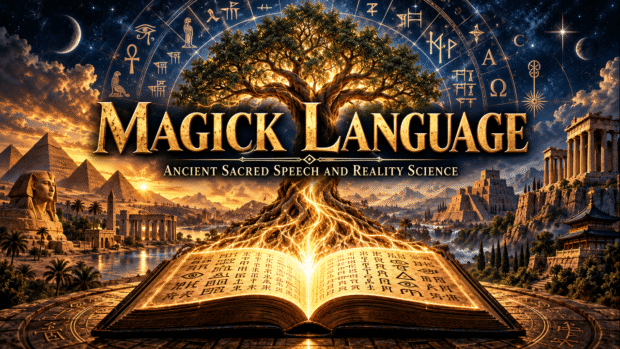
The Magick Root of Language – Magick Language Investigation – Free Download
Magick Language and the Questions Behind the Book Download Free Via the 3 Dots What does it mean to say that a word possesses power? The Magick Root of Language begins with a familiar observation: a spoken sentence can change what people do. A warning redirects a crowd. A promise establishes an expectation. A public ruling alters a legal status. A name allows an individual, place, or abstract idea to be identified and remembered. These effects are neither imaginary nor supernatural. They are consequences of how people think, cooperate, build institutions, and respond to shared signs. The harder question begins when a tradition attributes additional powers to a precise sound, a sacred name, a written character, or a ceremonial formula. The book investigates that historical claim without assuming in advance that every account describes a literal physical process.This is the […]
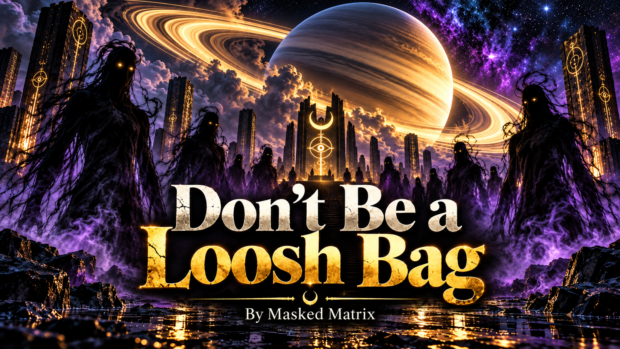
Don’t Be a Loosh Bag – By Masked Matrix – Full Album
Album: Don't Be a Loosh Bag By - Masked Matrix Release Date - 10/12/2026 1. Energy Vampires 2. Dark Clouds 3. Mind Traps 4. Loosh Farmers 5. Falling From Grace 6. Holographic Simulation 7. All Seeing Eye 8. Shadow People Under The Bed 9. See You in the Duat 10. The Mirror Level 11. The Jinn's Lamp 12. The Town With No Name 13. Madam Blavatsky 14. Unanswered Prayers 15. Legend of the Abyss 16. First Peak Behind the Veil 17. Apophis Is Coming <Download Album Free Here> 1. Energy Vampires [Verse] Night descends Shadows bite Dreams invaded Endless fight Astral claws They rip and tear Feeding hunger Unaware [Chorus] Energy drained Soul consumed In your sleep You're doomed They haunt the void Silent scream Energy vampires stalk your dream [Verse 2] Wings of black Eyes that gleam […]

The Secret Ladder of Existence – Inspired By Madam B | Free Download
The Secret Ladder of Existence: Two Editions, One Invitation to Explore Reality Download Free Via the 3 Dots Download Free Via the 3 Dots https://youtu.be/RJldG2HsYb4?si=pCMP2cRzEMjPS9Vw Subscribe: Veiled Mystic 333 A book can begin with a question that refuses to disappear. What does it mean to exist, and how much of existence can human beings actually perceive? We move through a world of bodies, landscapes, weather, and measurable forces. Yet we also inhabit a world of memory, imagination, dreams, relationships, moral commitments, and private experiences that no stranger can observe directly. The puzzle is not simply whether the physical world is real. The puzzle is whether our ordinary description of that world is complete, and what kind of evidence would justify any claim that more remains to be discovered. These questions inspire The Secret Ladder of Existence, a new exploration of […]
Angelometry: A History of Angels Across Religion, Myth, and Mysticism
Angelometry: A History of Angels Across Religion, Myth, and Mysticism Download Free Via the 3 dots https://youtu.be/ZxOdzI88Iy0?is=kKvvAn-zkfuMN_oF https://youtu.be/7KC7Wsht7u0?si=z4U65lMOECOnJ1uP Subscribe: Veiled Mystic 333 Angelometry is a useful word for a subject that refuses to remain inside a single religious box. The history of angels is not one continuous system handed down unchanged from antiquity. It is a layered record of messengers, heavenly attendants, watchers, throne beings, guardians, destroyers, healers, scribes, planetary intelligences, divine names, spirits, and even ancient gods who were later absorbed into angelic catalogs. To study Angelometry seriously is therefore to study how human beings across different times and cultures imagined the invisible world around the divine. The familiar image of a beautiful winged figure in white robes is only one late and highly influential expression of a much larger history. Earlier texts can describe angels as men, flames, wheels, […]

Getting to Know Thyself Better – Modern Tips for Spiritual Growth
Getting to Know Thyself Better https://youtu.be/rV53qO_Ocfg?is=VYcqCzUYUJ2Gu9G- Subscribe: Veiled Mystic For thousands of years, human beings have built systems for looking inward. Some used philosophy, some used prayer, some watched dreams, and others studied stars, cards, numbers, or the lines of the hand. Modern psychology added controlled observation, personality models, and behavioral research to the same ancient problem: how accurately can a person understand the person doing the observing? Today we have another instrument that earlier generations did not possess. A large language model can compare symbolic systems, organize personal observations, ask follow-up questions, and help a person examine patterns that might otherwise remain scattered across memory. Used carefully, these tools can help us Know Thyself Better without requiring us to treat every symbolic interpretation as a literal law of nature.The aim of this article is not to prove that a zodiac […]
Sleepnosis: The Mechanics of Sleep Hypnosis | Read or Download Free
Sleepnosis: The Mechanics of Sleep Hypnosis Read or Download the Free PDF Here Download the PDF Free Via the 3 Dots Above https://youtu.be/Dy9OElg7yXc?is=KEGIIkHusVNZXEvw Subscribe: Veiled Mystic Let's Get Into the Sleepnosis Study Sleepnosis is a Reality Science investigation into a subject that has spent far too long trapped between advertising language, mystical claims, old sleep-learning myths, legitimate hypnosis research, and rapidly improving neuroscience. The free PDF release of Sleepnosis: The Mechanics of Sleep Hypnosis was created to put those pieces into one usable map. The purpose is not to convince readers that the sleeping mind is a programmable machine. It is not to dismiss every unusual result because older claims were exaggerated. The purpose is to identify what has actually been demonstrated, what remains plausible but unsettled, what has been repeatedly misunderstood, and how a reader can think about […]
Related
Don’t Be a Loosh Bag – By Masked Matrix – Full Album
Album: Don't Be a Loosh Bag By - Masked Matrix Release Date - 10/12/2026 1. Energy Vampires 2. Dark Clouds 3. Mind Traps 4. Loosh Farmers 5. Falling From Grace 6. Holographic Simulation 7. All Seeing Eye 8. Shadow People Under The Bed 9. See You in the Duat 10. The Mirror Level 11. The Jinn's Lamp 12. The Town With No Name 13. Madam Blavatsky 14. Unanswered Prayers 15. Legend of the Abyss 16. First Peak Behind the Veil 17. Apophis Is Coming <Download Album Free Here> 1. Energy Vampires [Verse] Night descends Shadows bite Dreams invaded Endless fight Astral claws They rip and tear Feeding hunger Unaware [Chorus] Energy drained Soul consumed In your sleep You're doomed They haunt the void Silent scream Energy vampires stalk your dream [Verse 2] Wings of black Eyes that gleam […]
The Secret Ladder of Existence – Inspired By Madam B | Free Download
The Secret Ladder of Existence: Two Editions, One Invitation to Explore Reality Download Free Via the 3 Dots Download Free Via the 3 Dots https://youtu.be/RJldG2HsYb4?si=pCMP2cRzEMjPS9Vw Subscribe: Veiled Mystic 333 A book can begin with a question that refuses to disappear. What does it mean to exist, and how much of existence can human beings actually perceive? We move through a world of bodies, landscapes, weather, and measurable forces. Yet we also inhabit a world of memory, imagination, dreams, relationships, moral commitments, and private experiences that no stranger can observe directly. The puzzle is not simply whether the physical world is real. The puzzle is whether our ordinary description of that world is complete, and what kind of evidence would justify any claim that more remains to be discovered. These questions inspire The Secret Ladder of Existence, a new exploration of […]
Angelometry: A History of Angels Across Religion, Myth, and Mysticism
Angelometry: A History of Angels Across Religion, Myth, and Mysticism Download Free Via the 3 dots https://youtu.be/ZxOdzI88Iy0?is=kKvvAn-zkfuMN_oF https://youtu.be/7KC7Wsht7u0?si=z4U65lMOECOnJ1uP Subscribe: Veiled Mystic 333 Angelometry is a useful word for a subject that refuses to remain inside a single religious box. The history of angels is not one continuous system handed down unchanged from antiquity. It is a layered record of messengers, heavenly attendants, watchers, throne beings, guardians, destroyers, healers, scribes, planetary intelligences, divine names, spirits, and even ancient gods who were later absorbed into angelic catalogs. To study Angelometry seriously is therefore to study how human beings across different times and cultures imagined the invisible world around the divine. The familiar image of a beautiful winged figure in white robes is only one late and highly influential expression of a much larger history. Earlier texts can describe angels as men, flames, wheels, […]
Getting to Know Thyself Better – Modern Tips for Spiritual Growth
Getting to Know Thyself Better https://youtu.be/rV53qO_Ocfg?is=VYcqCzUYUJ2Gu9G- Subscribe: Veiled Mystic For thousands of years, human beings have built systems for looking inward. Some used philosophy, some used prayer, some watched dreams, and others studied stars, cards, numbers, or the lines of the hand. Modern psychology added controlled observation, personality models, and behavioral research to the same ancient problem: how accurately can a person understand the person doing the observing? Today we have another instrument that earlier generations did not possess. A large language model can compare symbolic systems, organize personal observations, ask follow-up questions, and help a person examine patterns that might otherwise remain scattered across memory. Used carefully, these tools can help us Know Thyself Better without requiring us to treat every symbolic interpretation as a literal law of nature.The aim of this article is not to prove that a zodiac […]
Sleepnosis: The Mechanics of Sleep Hypnosis | Read or Download Free
Sleepnosis: The Mechanics of Sleep Hypnosis Read or Download the Free PDF Here Download the PDF Free Via the 3 Dots Above https://youtu.be/Dy9OElg7yXc?is=KEGIIkHusVNZXEvw Subscribe: Veiled Mystic Let's Get Into the Sleepnosis Study Sleepnosis is a Reality Science investigation into a subject that has spent far too long trapped between advertising language, mystical claims, old sleep-learning myths, legitimate hypnosis research, and rapidly improving neuroscience. The free PDF release of Sleepnosis: The Mechanics of Sleep Hypnosis was created to put those pieces into one usable map. The purpose is not to convince readers that the sleeping mind is a programmable machine. It is not to dismiss every unusual result because older claims were exaggerated. The purpose is to identify what has actually been demonstrated, what remains plausible but unsettled, what has been repeatedly misunderstood, and how a reader can think about […]

Emotional Intelligence Maturity: Finding Peace in the Chaos
https://youtu.be/3_DQtLsBpWo?is=BGKAG8X1MfbVGPxe Subscribe: veiledMystic333 Emotional Intelligence Maturity: Finding Peace in the Chaos and Strength in the Darknes Emotional Intelligence is often introduced as a set of skills: recognize what you feel, understand why you feel it, regulate your reactions, read other people accurately, communicate well, and make better choices. All of that matters. But the deeper question is what happens when these skills become part of a mature personality. Emotional Intelligence maturity is not simply knowing the right vocabulary for feelings or being able to remain calm during an easy conversation. It is the ability to stay in honest relationship with reality when your pride is hurt, your expectations fail, someone disappoints you, your nervous system is activated, or life becomes chaotic. It is the difference between having emotional knowledge and being able to live by it when it costs something. […]