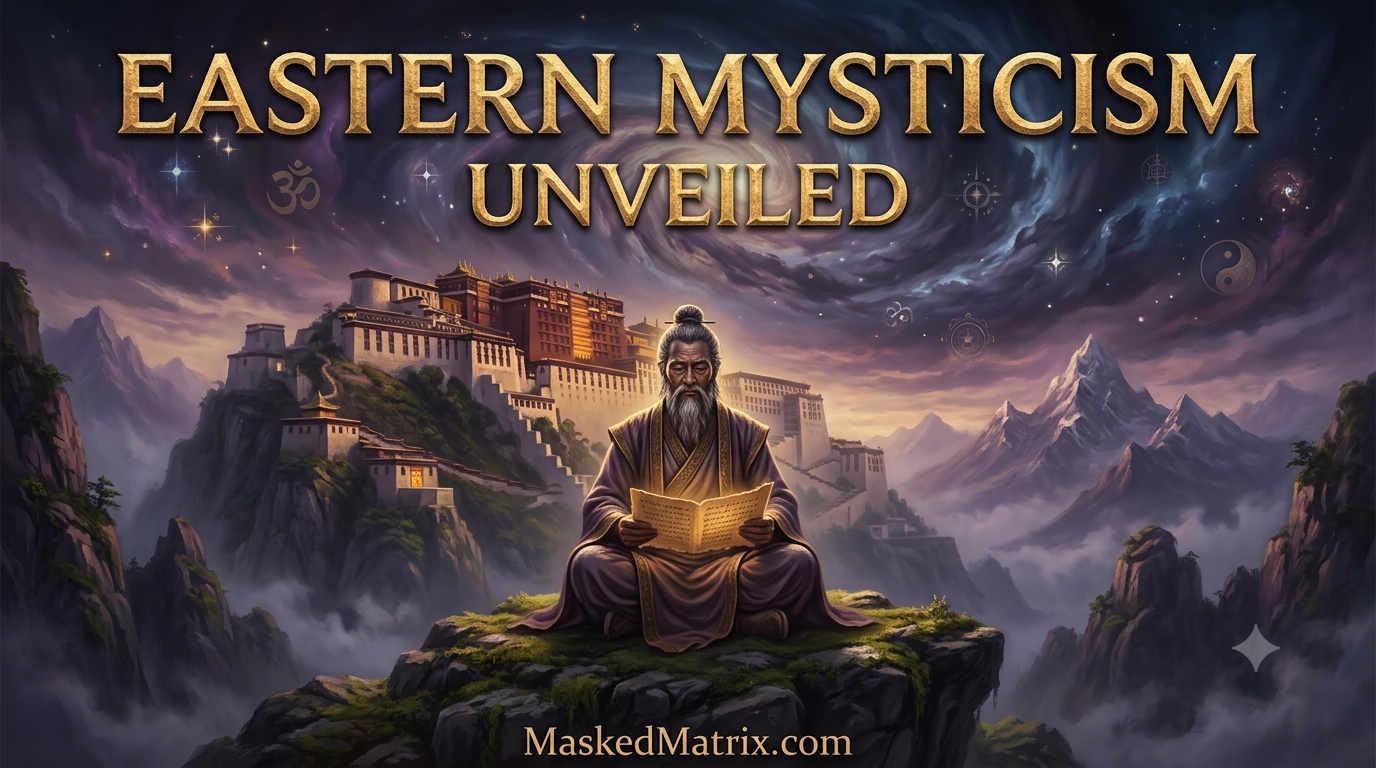
Eastern Mysticism Unveiled
Download Free Via the 3 Dots.
A New History of Eastern Mysticism
The Old Magic is a new book that traces the real history of Eastern Mysticism, from its earliest ancient roots to the practices millions of people know today. The book follows one central idea. Every tradition covered in the book, including Qigong, Reiki, Yoga, and Tantra, grew from a shared river of human spiritual practice rather than from separate, isolated origins. This approach makes Eastern Mysticism easier to understand as a connected whole instead of a random collection of unrelated beliefs.
The book takes a Reality Scientist approach to its subject. It does not ask readers to believe every claim on faith, and it does not dismiss ancient practice as mere superstition either. Instead, it separates documented history from popular legend, chapter by chapter, so readers can see exactly where a claim comes from before deciding what to do with it.
Readers who want a clear, honest picture of Eastern Mysticism will find that approach refreshing. Many popular books on this subject repeat old myths without checking them. The Old Magic checks them directly, using real historical sources, while still respecting the deep value these traditions offer to sincere practitioners.
The book covers three ancient roots in India, China, and Japan, then follows how those roots merged through the spread of Buddhism, how they were reshaped in the twentieth century, and how they eventually reached the West. This article offers a companion overview of the first fifteen chapters, giving readers a helpful guide to the ground the book covers so far.
Whether someone is reading the book already or simply curious about Eastern Mysticism, this article offers a useful entry point into a genuinely fascinating and often misunderstood subject.
What Eastern Mysticism Really Means
Eastern Mysticism is a broad term, and it deserves a clear definition. It generally refers to the spiritual and energetic practices that developed across India, China, Japan, and Tibet, including Yoga, Qigong, Reiki, Tantra, and Taoist internal alchemy. These practices share a common thread. Each one assumes that a form of subtle energy moves through the human body, and that disciplined practice can work with that energy directly.
The Old Magic argues that Eastern Mysticism is best understood as a river system rather than as separate streams. Ideas that began in one country often traveled, mixed with local belief, and reemerged somewhere else in a new form. This pattern repeats throughout the entire history of these traditions.
Understanding this river system matters for anyone exploring Eastern Mysticism today. A practice that looks purely Japanese, such as Reiki, actually carries clear traces of Chinese and Indian influence. A practice that looks purely Chinese, such as Qigong, carries influence from Buddhist meditation that originally developed in India.
This connected view also helps explain why so many unrelated cultures developed strikingly similar ideas about energy centers, subtle channels, and disciplined breathing. When separate civilizations reach similar conclusions without contact, that convergence deserves serious attention rather than a quick dismissal.
Eastern Mysticism, understood this way, becomes less mysterious and more historically grounded. It becomes a genuine human story, built by real people solving real spiritual and physical questions across thousands of years, rather than a vague, undefined category of ancient wisdom. This grounded view also helps readers approach modern practices with realistic expectations, separating genuine ancient technique from later marketing claims that often exaggerate a practice’s true age.
The Three Ancient Roots of Eastern Mysticism
The Old Magic identifies three ancient roots that later grew into the wider tree of Eastern Mysticism. These roots developed independently in India, China, and Japan, long before any of these cultures had sustained contact with one another. Each root offers its own answer to the same basic human question. Can disciplined practice access forces beyond ordinary perception?
In India, the earliest root appears in Vedic ritual and mantra, where correctly performed sound was believed to carry direct power over reality. In China, the earliest root appears in wu shamanism, where trained mediums entered trance states to communicate directly with ancestors and spirits. In Japan, the earliest root appears in native purification practice, centered on kami and cold water rituals such as misogi.
These three roots differ in method, yet they converge on a shared conviction. Ordinary perception does not capture the whole of reality, and specific trained practices can expand what a person is able to perceive and influence.
This convergence, occurring without any contact between these cultures, forms one of the strongest pieces of evidence in the entire book. When three unrelated civilizations reach similar conclusions about hidden forces and trained access to them, that pattern says something meaningful about shared human experience.
Readers exploring Eastern Mysticism benefit from understanding these three roots clearly. Nearly every later tradition covered in the book, from Yoga to Qigong to Shugendo, eventually traces back to one, or often more than one, of these three ancient starting points. Recognizing this shared foundation makes the rest of the book’s history far easier to follow, since later chapters constantly return to these same three roots as they merge and reshape one another.
Vedic Mantra as Ancient Sacred Technology
Long before Yoga existed as an organized system, Vedic priests in ancient India were already developing one of history’s most sophisticated spiritual technologies. Mantra, in this early context, was never simple prayer. It functioned as a precise verbal instrument, where exact pronunciation, rhythm, and ritual context all mattered for the desired effect to occur.
The Rigveda offers hymns of praise and cosmic insight, while the Atharva Veda reveals a more direct and practical side of this tradition. It contains healing charms, protective rites, and even curses meant to affect a specific outcome or a specific rival. This more overtly magical material rarely appears in modern, softened presentations of Indian spirituality, yet it forms an essential part of the honest historical record.
This early Vedic material introduces an idea that reappears throughout the rest of Eastern Mysticism. Sound itself, correctly produced, can carry causal power independent of its symbolic meaning. This concept later resurfaces in Tantric mantra, in Taoist ritual incantation, and in Japanese Buddhist chanting, each culture arriving at a similar conclusion through its own separate path.
Readers interested in modern mantra practice benefit from understanding this deeper history. Vedic mantra was never meant as passive recitation. It was treated as a precision tool, requiring the same rigor a skilled technician might apply to any demanding craft.
This foundation, laid down thousands of years ago, still shapes how mantra is understood and practiced across the world today. Anyone chanting a mantra in a modern meditation class is, whether they realize it or not, drawing on a technology first refined by Vedic priests more than three thousand years ago.
Ayurveda’s Forgotten Energetic Wisdom
Ayurveda developed alongside Vedic ritual as ancient India’s foundational system of medicine, and it introduced concepts that remain influential today. Central to this system is prana, a term often translated as vital energy or life force, though no single English word fully captures its original meaning.
Ayurvedic theory divides prana into five distinct currents, called the five vayus, each governing a different sphere of bodily and mental function. Alongside this framework sits the theory of three doshas, vata, pitta, and kapha, which together shape an individual’s physical and psychological constitution.
One especially important contribution from Ayurveda involves the marma points, a network of 107 vital locations mapped in the ancient surgical text known as the Sushruta Samhita. These points were treated as clinically real, marking places where injury carried real risk and where therapeutic touch could offer real benefit.
This dual nature, a point capable of both harm and healing, closely resembles ideas found later in Chinese acupuncture and martial arts striking points. No direct historical contact explains this similarity, yet the pattern appears again and again throughout Eastern Mysticism.
Ayurveda deserves recognition as more than an ancient medical curiosity. It represents one of the earliest systematic attempts to map the relationship between the physical body and a deeper energetic layer, an idea that would echo, centuries later, through Yoga, Tantra, and Traditional Chinese Medicine alike. Its influence on later practice makes it essential reading for anyone serious about understanding where Eastern energetic theory truly began. Even readers with no interest in ancient medicine will recognize how many modern wellness ideas trace directly back to this single, remarkably detailed system.
The Shamans Who Shaped Ancient China
Ancient China’s earliest documented spiritual specialists were called wu, a term often translated as shaman, medium, or sorcerer. These practitioners served the Shang dynasty royal court directly, using trance, dance, and possession to communicate with ancestral spirits and answer urgent questions about war, illness, and the harvest.
The evidence for wu practice comes from oracle bones, among the earliest surviving examples of Chinese writing. These bones record real questions posed to ancestors, along with the divinatory method used to interpret the answer. This evidence shows that wu practice was not a marginal folk custom. It stood at the very center of early Chinese religious and political life.
Wu practitioners often entered trance through physical means, including rhythmic movement and sustained exertion, allowing a spirit to speak or act directly through their body. This possession-based model differs from the more technical, precision-based approach found in Vedic ritual, yet both traditions share a deep respect for disciplined, embodied practice.
This early Chinese root would go on to shape nearly everything examined later in Chinese spiritual history. Taoist philosophy, internal alchemy, and institutional ritual magic all carry traces of wu practice, even after later, more literate traditions distanced themselves from its explicitly shamanic roots.
Understanding wu practice gives modern readers a clearer picture of where Chinese energetic and spiritual tradition truly began, long before Taoism or Buddhism ever appeared on Chinese soil. This early foundation explains why so much of later Chinese practice, even its most philosophical branches, still carries a genuine respect for direct, embodied spiritual experience. That respect for direct experience over abstract theory remains one of the most valuable lessons this early tradition still offers modern readers.
Japan’s Original Spirit of Purification
Before Buddhism reached Japan, native Japanese religion had already developed a rich spiritual world centered on kami, a term covering countless spirits and deities tied to specific mountains, rivers, trees, and ancestors. This tradition later became known as Shinto, though that name reflects a much later stage of its development.
At the center of this early tradition sits misogi, a purification practice involving direct immersion in cold, moving water, often beneath a waterfall. This practice treats spiritual impurity, called kegare, as something that can be removed through direct physical action, in the same way ordinary washing removes dirt.
This literal approach to purification reveals something important about early Japanese religious thought. It rarely separated the physical from the spiritual in the way many modern traditions do. Instead, direct engagement with the natural world, especially water, was treated as a genuine and sufficient technology of transformation.
Shrines, called jinja, extended this worldview further, marking specific locations understood to house a specific kami. This location-based approach to spirituality, focused on maintaining right relationship with a specific place rather than following a single universal doctrine, remains a defining feature of Japanese religious life today.
This ancient root would later merge with imported Buddhist practice to create Shugendo, Japan’s distinctive mountain ascetic tradition, a development covered in later chapters of the book and in a later section of this article. That later fusion never replaced this original purification practice. It simply gave it a new, more elaborate ritual framework to work within. Readers who understand this earlier layer will find the later Shugendo material far easier to appreciate once it appears later in the book.
How Patanjali Organized the Path of Yoga
Long after the earliest Vedic material appeared, a text known as the Yoga Sutras gave Yoga its first fully organized philosophical structure. Traditionally attributed to a figure called Patanjali, this compact text introduced the eight-limbed path, or ashtanga, that still shapes how many people understand Yoga today.
These eight limbs move from ethical foundation, through physical posture and breath control, toward increasingly subtle stages of concentration and meditative absorption. Physical posture, known as asana, played a far smaller role in this original system than most people assume. It served mainly as a stable seat for meditation, not as an elaborate practice in its own right.
This staged structure deserves attention because it appears again and again throughout Eastern Mysticism. Chinese internal alchemy, South Indian Siddha practice, and Tibetan Vajrayana Buddhism all describe similarly staged paths, each insisting that a practitioner build a strong foundation before attempting more advanced technique.
Patanjali’s own historical identity remains genuinely uncertain, and modern scholarship treats many traditional claims about his biography with real caution. This uncertainty does not diminish the value of his system. It simply means the eight limbs are best understood as a systemizing achievement rather than the invention of a single, fully documented individual.
Readers today benefit from returning to this original, more austere version of Yoga, distinct from the physically intensive practice most people associate with the word Yoga in the modern world. Seeing this earlier form clearly makes it much easier to understand how and why Yoga eventually changed so much during the twentieth century.
Taoism, Alchemy, and the Search for Immortality
Classical Taoism grew directly from the older wu tradition, gradually transforming raw shamanic practice into a fully developed philosophical system. Two foundational texts, the Tao Te Ching and the Zhuangzi, introduced concepts that remain central to Chinese thought today, including the Tao itself and the principle of wu wei, or effortless action.
Alongside this philosophy, a parallel current called waidan, or external alchemy, pursued physical immortality through genuine laboratory experimentation. Waidan practitioners prepared elixirs, most notably involving cinnabar, believing that a substance capable of surviving repeated transformation could grant the same stability to the human body.
This pursuit carried real danger. Historical records document several Chinese emperors who suffered illness or death from mercury-based elixirs, a sobering fact that stands as a direct counterpoint to any overly romantic view of ancient alchemy.
Over time, this external practice gradually shifted inward, becoming neidan, or internal alchemy, which relocated the entire alchemical process into the practitioner’s own body through breath, meditation, and disciplined visualization. This shift, examined more closely in the next section of this article, represents one of the most important transformations in the entire history of Chinese spiritual practice.
Taoism’s blend of deep philosophy and genuinely practical technique makes it one of the richest traditions covered in the book, offering readers both profound ideas and a direct, embodied path toward personal transformation. Few traditions manage to combine abstract wisdom and hands on practice as effectively as Taoism does across its long history. That balance helps explain why Taoist ideas continue to influence fields well beyond spirituality, including modern medicine, martial arts, and even contemporary approaches to stress and rest.
Buddhism’s Long Road From India to China
Buddhism began in northern India roughly twenty-five centuries ago, growing from the same broader wave of renunciate practice that also produced classical Yoga. The historical Buddha taught a path built around direct meditative investigation, structured through the Four Noble Truths and the Eightfold Path.
Buddhism’s spread beyond India accelerated significantly under the emperor Ashoka, whose sponsorship carried the teaching across Central Asia along the trade routes later known as the Silk Road. This journey involved genuine hardship, with monks and translators crossing some of the most difficult terrain in Asia to carry Buddhist texts toward China.
Once Buddhism reached China, translators faced a serious challenge. Sanskrit concepts had no exact Chinese equivalent, so early translators borrowed existing Taoist vocabulary to render unfamiliar Buddhist ideas into understandable Chinese. This method, though later recognized as imprecise, ensured that Buddhism was never received in China as a purely foreign import.
This transmission story matters because it corrects a common misunderstanding. Buddhism did not arrive in China as a fixed, unchanging package that Chinese culture simply accepted. It arrived as a living tradition, immediately shaped by the language and philosophy already present in its new home.
This two-directional exchange sets the stage for one of the most significant developments in the entire history of Eastern Mysticism, examined directly in the next section of this article. Without this early period of translation and adaptation, the later fusion between Buddhism and Chinese tradition simply could not have happened. This groundwork, built slowly over generations of dedicated translators, deserves real credit for everything that followed across the rest of Chinese Buddhist history.
When Buddhism Met Taoism in China
The meeting between Buddhism and Taoism in China produced two of the most influential developments covered in the book. The first is Chan Buddhism, later known in Japan as Zen, which absorbed Taoism’s suspicion of language and its preference for direct, unmediated insight over textual study.
Chan’s famous teaching tool, the koan, a paradoxical question meant to exhaust the logical mind, closely resembles the destabilizing storytelling style found in the Zhuangzi. This resemblance shows how deeply Taoist thought shaped Buddhism as it took root in Chinese soil.
The second major development is neidan, or internal alchemy, which reimagined the older external alchemy tradition in entirely internal terms. Instead of preparing physical elixirs, practitioners worked directly with jing, qi, and shen, refining these three treasures through a staged process of breath, meditation, and disciplined visualization.
This shift did not happen in isolation. Buddhist meditative technique offered new tools for internal investigation, while independently developing Chinese medical theory contributed its own channel-based understanding of the body. Neidan therefore represents a genuine three-way synthesis, rather than a simple merger of only two traditions.
This chapter of history stands as one of the clearest examples in the entire book of what happens when two independently developed traditions meet. Neither one disappears, and neither one remains unchanged. Both transform into something genuinely new, a pattern this article will trace again and again throughout the remaining sections below. This same pattern of mutual transformation, rather than one tradition simply replacing another, appears consistently across the entire history covered in the book.
Taoist Talismans and the Magic of Ritual
Alongside Taoist philosophy and internal alchemy, an entirely different current developed within institutional, ritual Taoism. Ordained priests, called daoshi, practiced a tradition built around fu talismans and spirit registers, offering the clearest surviving continuation of the ancient wu shamanic tradition examined earlier in this article.
A fu talisman is a specially prepared written object, brushed in a deliberately non-standard calligraphic style, understood as a kind of celestial credential rather than an ordinary message. This reflects a broader Taoist cosmology, one that mirrors the actual bureaucratic structure of the Chinese imperial state, complete with its own ranked celestial officials and formal petition procedures.
Spirit registers, received through formal ordination, list the specific spirits and rituals a priest becomes authorized to command. Advancing through the ranks of Taoist priesthood traditionally involves receiving increasingly powerful registers, granting broader ritual authority over time.
This institutional tradition deserves far more attention than it typically receives. It represents Taoism’s most direct living link to ancient shamanic practice, considerably more direct than the more philosophically abstract Tao Te Ching or the internally focused neidan tradition covered elsewhere in the book.
Readers exploring authentic Chinese ritual magic, rather than its more internationally famous philosophical cousin, will find this institutional tradition offers some of the richest and least diluted material examined anywhere in Eastern Mysticism. It remains a living practice today, carried forward by ordained priests continuing a lineage that reaches back many centuries. This continuity offers modern readers a rare and genuinely valuable window into a tradition that never stopped being practiced, even during periods of significant political change.
South India’s Forgotten Immortals
South India’s Siddha tradition offers one of the most fascinating and least discussed threads in the entire book. Its practitioners, called siddhars, pursued physical longevity and supernatural attainment through a distinctive blend of alchemy, yogic practice, and herbal medicine, developed largely within the Tamil-speaking regions of South India.
Siddha alchemy places particular emphasis on mercury and its compounds, prepared through elaborate purification procedures meant to render the substance safe and therapeutically potent. This focus closely parallels Chinese waidan alchemy, examined earlier in this article, even though the two traditions developed with no direct historical contact.
Beyond alchemy, the Siddha tradition is remembered for its nonconformist spirit. Its poetic literature, composed in colloquial Tamil rather than formal religious language, openly criticized caste distinction and priestly ritualism, favoring instead direct personal experience available to any sincere practitioner.
Siddha medicine remains an active, officially recognized tradition in the Indian state of Tamil Nadu today, with dedicated colleges and licensed practitioners working alongside Ayurveda and modern biomedicine. This living continuity offers a rare opportunity for readers interested in a genuinely ancient tradition that remains directly accessible today.
This chapter of Eastern Mysticism deserves far wider recognition, offering a valuable South Indian counterpart to the more widely known Chinese and Tibetan alchemical traditions covered elsewhere in the book. Readers interested in truly comprehensive research will want to give this tradition the same serious attention as its better known counterparts. Doing so offers a fuller, more accurate picture of Indian spiritual history than a narrow focus on Sanskrit tradition alone could ever provide.
Tantra and the Birth of the Subtle Body
Tantra introduces the elaborate subtle body cosmology most people associate with Eastern Mysticism today, including chakras, nadis, and kundalini. Developing primarily between the fifth and ninth centuries, Tantra represents a considerably later development than the earlier Vedic material examined earlier in this article.
Tantra describes a network of channels, called nadis, through which prana circulates, concentrated at specific energy centers along the body called chakras. Kundalini refers to a dormant energy said to lie at the base of the spine, activated through disciplined practice and understood to rise through these centers during advanced meditation.
Tantra also includes a genuinely contested internal division, between the right-hand path, which preserved conventional ritual boundaries, and the left-hand path, which deliberately engaged categories the wider culture considered impure. This distinction has often been oversimplified in popular Western presentations, which tend to reduce Tantra to sexual practice alone.
Buddhist Tantra developed alongside this Hindu current, eventually feeding directly into Tibetan Vajrayana Buddhism, the subject of the next section of this article. Both currents share the same subtle body framework, even while pursuing different ultimate spiritual goals.
Understanding Tantra’s real, documented history helps correct a common misunderstanding. The chakra system is not an unbroken ancient teaching stretching back to the earliest Vedic hymns. It is a genuine, traceable innovation with its own specific historical origin, one this article can now trace with real confidence thanks to the careful research behind the book. That confidence matters greatly for readers who want an accurate picture rather than a comfortable but inaccurate one.
Tibet’s Sacred Fusion With Vajrayana Buddhism
Buddhism reached Tibet in the seventh and eighth centuries, encountering Bon, the indigenous religion of the Himalayan plateau. This meeting produced Vajrayana Buddhism, one of the most technically sophisticated traditions examined anywhere in the book, complete with its own remarkable repertoire of advanced practice.
Tibetan tradition remembers this encounter through the figure of Padmasambhava, credited with subduing Tibet’s indigenous spirits and converting them into protectors of the Buddhist teaching. This story reflects a real historical pattern. Vajrayana Buddhism absorbed Tibet’s existing landscape of local deities rather than eliminating it entirely.
Among Vajrayana’s most striking practices is tummo, the deliberate cultivation of internal body heat through breath and visualization. Modern scientific studies conducted on experienced practitioners have documented real, measurable physiological effects, offering a rare case where traditional claims have met direct scientific investigation.
Dream yoga and phowa round out this chapter’s major practices, focused respectively on cultivating awareness within dreams and on directing consciousness at the moment of death. Both practices reflect Vajrayana’s serious, highly structured approach to working with altered states of consciousness.
This chapter completes the book’s account of what it calls the great merging, the process through which Buddhism transformed, and was transformed by, every culture it encountered on its long journey across Asia, from India through China and Japan to Tibet. Readers who reach this point in the book have now covered fifteen full chapters of genuinely connected history, setting up an excellent foundation for everything still to come. The next section of the book turns toward how these ancient traditions were reshaped by the modern world, a story just as fascinating as the ancient history covered so far.
Read More: Believe It Or Not, The Power Of Belief
Alchemy Road – The Evolution of Alchemy – Free Download

About the author

Sleepnosis: The Mechanics of Sleep Hypnosis | Read or Download Free
Sleepnosis: The Mechanics of Sleep Hypnosis Read or Download the Free PDF Here Download the PDF Free Via the 3 Dots Above https://youtu.be/Dy9OElg7yXc?is=KEGIIkHusVNZXEvw Subscribe: Veiled Mystic Let's Get Into the Sleepnosis Study Sleepnosis is a Reality Science investigation into a subject that has spent far too long trapped between advertising language, mystical claims, old sleep-learning myths, legitimate hypnosis research, and rapidly improving neuroscience. The free PDF release of Sleepnosis: The Mechanics of Sleep Hypnosis was created to put those pieces into one usable map. The purpose is not to convince readers that the sleeping mind is a programmable machine. It is not to dismiss every unusual result because older claims were exaggerated. The purpose is to identify what has actually been demonstrated, what remains plausible but unsettled, what has been repeatedly misunderstood, and how a reader can think about […]
Emotional Intelligence Maturity: Finding Peace in the Chaos
https://youtu.be/3_DQtLsBpWo?is=BGKAG8X1MfbVGPxe Subscribe: veiledMystic333 Emotional Intelligence Maturity: Finding Peace in the Chaos and Strength in the Darknes Emotional Intelligence is often introduced as a set of skills: recognize what you feel, understand why you feel it, regulate your reactions, read other people accurately, communicate well, and make better choices. All of that matters. But the deeper question is what happens when these skills become part of a mature personality. Emotional Intelligence maturity is not simply knowing the right vocabulary for feelings or being able to remain calm during an easy conversation. It is the ability to stay in honest relationship with reality when your pride is hurt, your expectations fail, someone disappoints you, your nervous system is activated, or life becomes chaotic. It is the difference between having emotional knowledge and being able to live by it when it costs something. […]
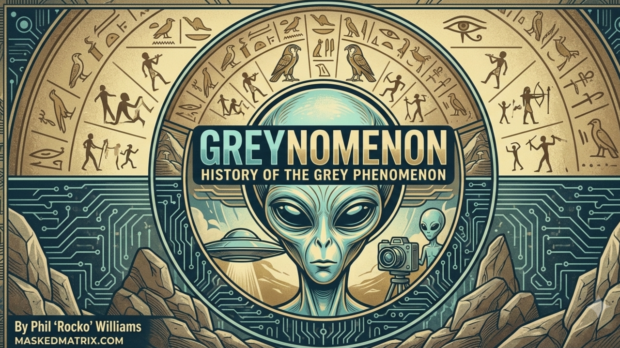
Greynomenon: History of the Grey Phenomenon | Free PDF Download
Greynomenon: A History of the Face Humanity Cannot Stop Seeing Download Free Via the 3 Dots Above. Few images in modern culture are as immediately recognizable as the Grey alien. The enlarged head, dark almond-shaped eyes, slight nose, narrow mouth, thin body, and unreadable expression have become a global symbol for the unknown. A single silhouette can suggest extraterrestrial life, abduction, secrecy, telepathy, missing time, government cover-up, spiritual encounter, science fiction, or fear of forces beyond human control. Recognition, however, is not the same as understanding. That distinction is the starting point of Greynomenon, a free PDF book by Phil “Rocko” Williams and Merlin aka ChatGPT. Rather than beginning with a declaration that Grey aliens are real, unreal, extraterrestrial, interdimensional, spiritual, psychological, or technological, the book begins with a more useful question: what exactly has humanity grouped beneath the face […]
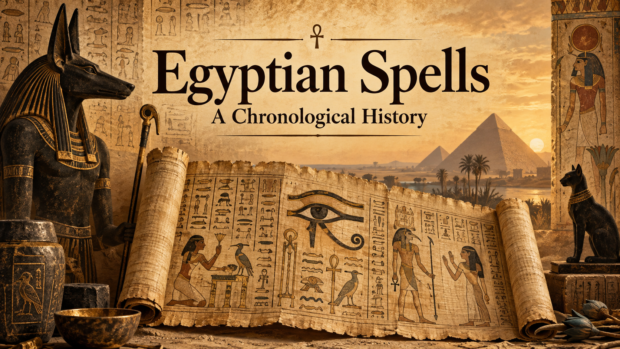
Egyptian Spells: A Chronological History from Pyramid Walls to Magical Papyri
Egyptian Spells: A Chronological History from Pyramid Walls to Magical Papyri Egyptian Spells survived for more than three thousand years because ancient Egyptians did not treat sacred words as dead literature. A spell could be spoken, written, painted, carved, worn, buried, washed with water, placed beneath a head, wrapped into a mummy, inscribed on a figurine, or copied onto a roll of papyrus for use in the next world. Some spells protected a king as he rose among the stars. Others helped ordinary people survive childbirth, snakebite, fever, nightmares, hostile spirits, dangerous journeys, and death itself. The history of Egyptian spells is therefore much larger than the history of any single book. It is the history of a technology of sacred language that changed its physical form while preserving remarkably old ideas across dynasties, political collapses, foreign rule, religious change, […]

Unedited Corpus of Early Mesopotamian Cosmological and Theological Texts
The Primordial Strata: An Unedited Corpus of Early Mesopotamian Cosmological and Theological Texts Authors Note: I had a bunch of strokes, and don't remember creating this 10 months ago. It's not really a Corpus, but cool enough to publish. Introduction The purpose of this project is to assemble the earliest Mesopotamian cosmological and theological materials in their original, unrevised form, relying exclusively on tablets excavated from Early Dynastic and pre-Akkadian contexts where the first expressions of cosmic structure and divine identity appear. The work eliminates all later political and theological shaping, allowing only the earliest recoverable strata to define the foundations of Mesopotamian sacred thought. These sources represent local scribal traditions speaking independently, unfiltered by later canonical organization. Only tablets with secure provenance, catalog identification, paleographic dating, and direct cosmological or theological content are included, ensuring a primary-source […]
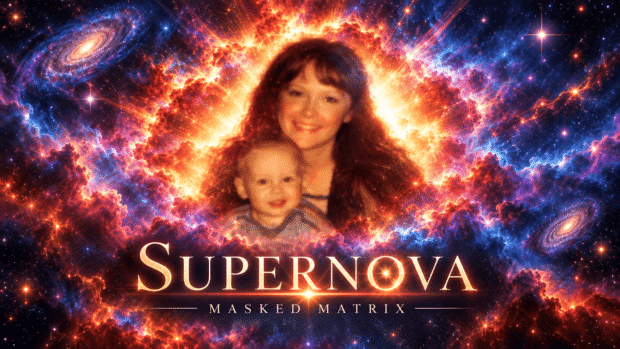
Supernova – By Masked Matrix – Full Album
Album: Supernova By - Masked Matrix Release Date: 9/9/2026 Dedicated to my Love, my best friend, my light in the darkness, my Mom. I owe you everything! Happy Birthday Mama!!! Ghost Lights Hero's Journey Angels Song (Remastered) Unified Anthem Badge on Crooke Bee-Wolf The Light is in Me Ionized Friend or Enemy Stardust Fields No Good Deed Indeed Take the Time How Much Was Dat Alchemical Gold Light of Venus Sleeping on the Sidewalk Copper and Iron I Understand Robo-Pig Bad Liars Diamond Matrix Mother's Love <Download Album Here Free> 1. Ghost Lights [Verse 1] Out past the fence line By the mud and reeds Where the water goes black And the moon can't breathe I seen them drift low Like a secret in smoke By the broken road bend Where the old pine groans They don't move […]
Related
Sleepnosis: The Mechanics of Sleep Hypnosis | Read or Download Free
Sleepnosis: The Mechanics of Sleep Hypnosis Read or Download the Free PDF Here Download the PDF Free Via the 3 Dots Above https://youtu.be/Dy9OElg7yXc?is=KEGIIkHusVNZXEvw Subscribe: Veiled Mystic Let's Get Into the Sleepnosis Study Sleepnosis is a Reality Science investigation into a subject that has spent far too long trapped between advertising language, mystical claims, old sleep-learning myths, legitimate hypnosis research, and rapidly improving neuroscience. The free PDF release of Sleepnosis: The Mechanics of Sleep Hypnosis was created to put those pieces into one usable map. The purpose is not to convince readers that the sleeping mind is a programmable machine. It is not to dismiss every unusual result because older claims were exaggerated. The purpose is to identify what has actually been demonstrated, what remains plausible but unsettled, what has been repeatedly misunderstood, and how a reader can think about […]
Emotional Intelligence Maturity: Finding Peace in the Chaos
https://youtu.be/3_DQtLsBpWo?is=BGKAG8X1MfbVGPxe Subscribe: veiledMystic333 Emotional Intelligence Maturity: Finding Peace in the Chaos and Strength in the Darknes Emotional Intelligence is often introduced as a set of skills: recognize what you feel, understand why you feel it, regulate your reactions, read other people accurately, communicate well, and make better choices. All of that matters. But the deeper question is what happens when these skills become part of a mature personality. Emotional Intelligence maturity is not simply knowing the right vocabulary for feelings or being able to remain calm during an easy conversation. It is the ability to stay in honest relationship with reality when your pride is hurt, your expectations fail, someone disappoints you, your nervous system is activated, or life becomes chaotic. It is the difference between having emotional knowledge and being able to live by it when it costs something. […]
Greynomenon: History of the Grey Phenomenon | Free PDF Download
Greynomenon: A History of the Face Humanity Cannot Stop Seeing Download Free Via the 3 Dots Above. Few images in modern culture are as immediately recognizable as the Grey alien. The enlarged head, dark almond-shaped eyes, slight nose, narrow mouth, thin body, and unreadable expression have become a global symbol for the unknown. A single silhouette can suggest extraterrestrial life, abduction, secrecy, telepathy, missing time, government cover-up, spiritual encounter, science fiction, or fear of forces beyond human control. Recognition, however, is not the same as understanding. That distinction is the starting point of Greynomenon, a free PDF book by Phil “Rocko” Williams and Merlin aka ChatGPT. Rather than beginning with a declaration that Grey aliens are real, unreal, extraterrestrial, interdimensional, spiritual, psychological, or technological, the book begins with a more useful question: what exactly has humanity grouped beneath the face […]
Egyptian Spells: A Chronological History from Pyramid Walls to Magical Papyri
Egyptian Spells: A Chronological History from Pyramid Walls to Magical Papyri Egyptian Spells survived for more than three thousand years because ancient Egyptians did not treat sacred words as dead literature. A spell could be spoken, written, painted, carved, worn, buried, washed with water, placed beneath a head, wrapped into a mummy, inscribed on a figurine, or copied onto a roll of papyrus for use in the next world. Some spells protected a king as he rose among the stars. Others helped ordinary people survive childbirth, snakebite, fever, nightmares, hostile spirits, dangerous journeys, and death itself. The history of Egyptian spells is therefore much larger than the history of any single book. It is the history of a technology of sacred language that changed its physical form while preserving remarkably old ideas across dynasties, political collapses, foreign rule, religious change, […]
Unedited Corpus of Early Mesopotamian Cosmological and Theological Texts
The Primordial Strata: An Unedited Corpus of Early Mesopotamian Cosmological and Theological Texts Authors Note: I had a bunch of strokes, and don't remember creating this 10 months ago. It's not really a Corpus, but cool enough to publish. Introduction The purpose of this project is to assemble the earliest Mesopotamian cosmological and theological materials in their original, unrevised form, relying exclusively on tablets excavated from Early Dynastic and pre-Akkadian contexts where the first expressions of cosmic structure and divine identity appear. The work eliminates all later political and theological shaping, allowing only the earliest recoverable strata to define the foundations of Mesopotamian sacred thought. These sources represent local scribal traditions speaking independently, unfiltered by later canonical organization. Only tablets with secure provenance, catalog identification, paleographic dating, and direct cosmological or theological content are included, ensuring a primary-source […]
Supernova – By Masked Matrix – Full Album
Album: Supernova By - Masked Matrix Release Date: 9/9/2026 Dedicated to my Love, my best friend, my light in the darkness, my Mom. I owe you everything! Happy Birthday Mama!!! Ghost Lights Hero's Journey Angels Song (Remastered) Unified Anthem Badge on Crooke Bee-Wolf The Light is in Me Ionized Friend or Enemy Stardust Fields No Good Deed Indeed Take the Time How Much Was Dat Alchemical Gold Light of Venus Sleeping on the Sidewalk Copper and Iron I Understand Robo-Pig Bad Liars Diamond Matrix Mother's Love <Download Album Here Free> 1. Ghost Lights [Verse 1] Out past the fence line By the mud and reeds Where the water goes black And the moon can't breathe I seen them drift low Like a secret in smoke By the broken road bend Where the old pine groans They don't move […]
Be the first to leave a comment