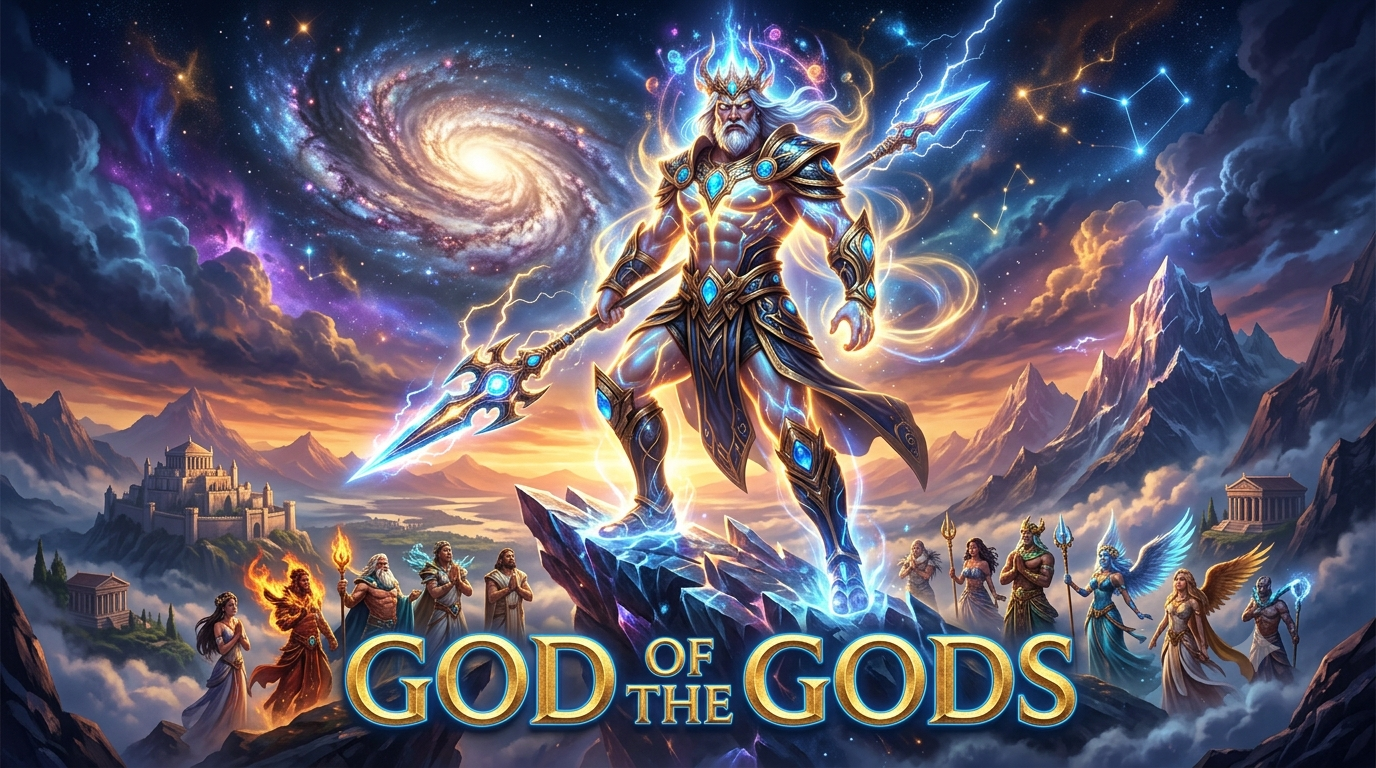
God of the Gods: The Hidden Throne
Download Via the 3 Dots in the Bottom Right Corner
What Ancient Cultures Believed About A God Of The Gods
Every culture that ever built a pantheon eventually ran into the same strange problem. If your chief god has a name, a personality, and a story, then something about that description already feels incomplete. A being with a name can be petitioned. A being with a personality can be flattered, angered, or outwitted. A being with a story has a beginning, which means something came before it. Ancient thinkers across the world noticed this gap and answered it independently, without ever comparing notes, by placing something else behind their most powerful god. Not a rival. Not a replacement. A concealed authority that even the reigning sky father had to answer to.
This idea shows up so often, in so many unconnected places, that it deserves its own name. Call it the god of the gods. Egypt had one. Etruria had one. Greece, Mesopotamia, India, Scandinavia, China, and the ancient Levant all had their own versions, built from local materials and local language, yet strikingly similar in shape. This article walks through what these cultures actually believed, in their own historical order, before turning to the later philosophers who tried to gather all these scattered intuitions into something more systematic.
Three Ways Ancient People Imagined The God Of The Gods
Before getting into individual cultures, it helps to notice that ancient people generally reached for one of three tools when they needed to explain an authority standing above their visible pantheon.
The first tool was impersonal law. Some cultures did not give their highest power a face at all. They described it as a fact about how reality is built, the way gravity is a fact rather than a decision someone made. Greek fate belongs here. So does Mesopotamian destiny, treated less like a decree and more like a structural rule the gods themselves lived inside.
The second tool was a primordial substance that existed before the gods did. Egyptian religion pictured a boundless, dark, undifferentiated water that came before creation and that creation itself rose out of. This water was not a ruler giving orders. It was a condition, a starting point, closer to an ocean than to a king.
The third tool, and the one this article spends the most time on, was concealment itself. Several cultures decided their highest power was a real someone, with intention and identity, who nonetheless could not be named, addressed, or fully known, even by the other gods. This is the boldest of the three moves, because it builds unknowability directly into the definition of ultimate authority.
Egypt And The Hidden One Behind Every God
Egyptian religion gives us the clearest and best documented example of a god of the gods anywhere in the ancient world. The god Amun carried a name that Egyptologists generally trace to a root meaning hidden or concealed. That is not a coincidence buried in old grammar. It is the theology, spelled out in the name itself.
Amun began as a relatively minor god tied to the city of Thebes. As Thebes rose to political power, Amun rose with it, eventually merging with the older, more established sun god Ra to form Amun Ra, the effective king of the Egyptian pantheon by the height of the New Kingdom. Here is the part worth sitting with. Amun Ra had one of the wealthiest, most powerful priesthoods in the ancient world, centered on the enormous temple complex at Karnak. And yet Egyptian religious texts kept insisting that behind all that visible splendor, the god himself remained fundamentally hidden.
Hymns composed during the Ramesside period, roughly the thirteenth through eleventh centuries before the common era, describe other gods as mere forms or manifestations that the truly hidden Amun works through, without ever being fully revealed even in those forms. Some of these hymns go so far as to say that Amun’s true name is unknown even to the other gods. That is an extraordinary claim for a civilization to build directly into its most prominent temple’s own sacred literature.
Beneath Amun sits something even stranger. Egyptian cosmology describes Nun, the primeval waters that existed before creation and that never fully went away. Egyptian myth pictures the first true god, usually identified as Atum, rising up out of Nun through an act of self creation, separating himself from the formless deep by the sheer act of becoming distinct. Nun does not vanish once this happens. It continues to exist, surrounding the ordered world, and the Egyptians connected this directly to the yearly Nile flood, which they understood as chaos briefly and beneficially returning to the edges of civilized life.
A related Egyptian tradition, associated with the city of Hermopolis, describes eight primordial forces called the Ogdoad, paired male and female, representing qualities like infinity, darkness, and hiddenness itself, whose interaction is what produces the first true creator god in the first place. This is a genuinely different picture from a single hidden being. It is a whole council of pre personal forces standing behind even the earliest proper god of the pantheon.
Etruria And The Veiled Powers Above Tinia
The Etruscans present a harder puzzle than the Egyptians, because almost nothing of their own theology survives in their own words. Most of what we know comes through later Roman writers describing Etruscan religion long after the fact. Even with that limitation, the Etruscan material offers one of the most striking examples in this entire article.
The chief Etruscan sky and thunder god was named Tinia, closely related in function to the more familiar Zeus and Jupiter. Tinia had the power to hurl thunderbolts, but Roman sources describe several distinct grades of thunderbolt, and only the mildest could be sent on Tinia’s own authority alone. The gravest bolts, the ones tied to the destruction of cities or major shifts in fate, required the consent of other, unnamed powers standing above even Tinia’s own throne.
These powers are called, in the surviving Latin sources, the Dii Involuti, which translates roughly as the veiled gods or the wrapped gods. Unlike Amun, the Involuti have no individual names, no temples, and no public cult that survives in the record. They appear only functionally, at the exact point where the theology needs to explain why even the highest visible god has a ceiling on his own authority.
This detail matters because it was not just abstract philosophy for the Etruscans. They were famous throughout the ancient Mediterranean for reading omens in lightning and in the livers of sacrificed animals, a practice called haruspicy. Knowing which tier of hidden authority stood behind a given omen actually told a trained priest how serious that omen was. The concealment was built directly into their working religious technology, not just their poetry.
Etruscan religion also preserved a striking origin story for its own sacred knowledge. According to the tale, a farmer plowing a field near the city of Tarquinia struck something in the furrow that rose up in the shape of a being with the face and wisdom of an old man but the body of a child. This figure, called Tages, spoke the entirety of Etruscan sacred law on the spot, was written down by the nobles gathered to hear him, and then vanished. Notice what this story does. Sacred knowledge does not descend from the sky through the thunder god. It rises up from the earth itself, delivered once, and then gone forever.
Greece And The Fate Even Zeus Could Not Override
Most people already know something about Greek mythology, which makes it a useful place to correct a common assumption. Zeus is often imagined as the unchallenged ruler of the cosmos, but the earliest and most respected Greek sources actually show him operating under a real limit that has nothing to do with any rival god.
The clearest example appears in Homer’s Iliad. Sarpedon, a mortal son of Zeus, is fated to die in battle. Zeus, watching from above and loving his son, considers snatching him away from his fate entirely. His wife Hera warns him against it. If Zeus overrides one fated death because the victim happens to be his own favorite, she argues, every other god will demand the same exception, and the entire order that keeps the cosmos predictable collapses into favoritism. Zeus lets his son die, weeping as he does, because breaking fate would cost him something larger than one life.
The power behind this limit was called Moira, meaning portion or allotted share, usually personified as three sisters who spin, measure, and cut the thread of every life. A more abstract cousin of this idea, called Ananke or necessity, appears in later Greek philosophy as something even older than the Olympian gods themselves, binding the entire cosmos into order rather than chaos.
Greek religion also had a more hidden, less publicly institutional strand called Orphism, which told its own creation story. In this version, a cosmic egg emerges out of primordial night, and from that egg hatches Phanes, a luminous, primordial being older than Zeus. Some versions of the myth say Zeus achieves his final supremacy specifically by swallowing Phanes, absorbing this older, more concealed power into himself. It is worth noticing how closely this mirrors Egyptian ideas about light emerging from primordial darkness, even though there is no confirmed direct link between the two traditions.
Mesopotamia And Authority As A Physical Object
Mesopotamian religion solves the god of the gods problem differently than anyone else covered so far. Instead of a hidden being or an impersonal law, Mesopotamian myth imagined ultimate authority as something closer to an object, a physical emblem of office that could actually change hands.
The great Babylonian creation epic, known as the Enuma Elish, opens with a long genealogy of primordial pairs. Apsu and Tiamat, the fresh and salt waters, mingle to produce the first gods. From that generation come Anshar and Kishar, whose very names mean whole sky and whole earth, encompassing totalities rather than fully personal characters. Eventually this line produces Marduk, the god who becomes the epic’s central hero.
When the fearsome mother goddess Tiamat rises up to destroy the younger gods, none of them can stand against her alone. Marduk agrees to fight her, but only on the condition that if he wins, the assembled gods grant him supreme kingship over all of them in advance. He defeats Tiamat, splits her body to form the sky and the earth, and receives the Tablet of Destinies, an object that grants whoever legitimately holds it the power to decree binding outcomes for gods and mortals alike.
This tablet had been held by earlier gods before Marduk, and in a related myth it is even stolen for a time by a monstrous bird before being recovered. Authority here is not a permanent, unchangeable nature belonging to one hidden being. It is a legitimate office that can be transferred, defended, or even stolen, always according to a logic of rightful possession the myth expects its audience to respect. It is easy to see the political point being made here too. This story was told in a city, Babylon, that wanted its own patron god recognized as supreme over older rival cities, and its creation myth quietly makes that argument for it.
India And The Long Journey Toward Brahman
India gives this article its most philosophically developed example, and it is also the only culture here where we can actually watch the idea change over time across many centuries of surviving texts, rather than having to reconstruct it from fragments.
The earliest layer of Indian scripture, the hymns of the Rig Veda, describes gods that would feel familiar to a reader of Greek or Mesopotamian myth. Indra rules storm and war. Agni presides over sacred fire. Varuna watches over truth and cosmic order. These gods are addressed directly, asked for concrete favors, and celebrated through ritual sacrifice, much like their counterparts elsewhere in the ancient world.
Even within this earliest layer, though, one remarkable hymn already reaches for something more radical. Known as the Hymn of Creation, it describes the state before creation as neither existence nor non existence, neither death nor deathlessness, a darkness hidden by darkness. Rather than confidently explaining how the universe began, the hymn ends by openly wondering whether even the gods can know the answer, since the gods themselves came after creation began. This kind of built in uncertainty, placed directly inside a sacred text, is rare in the ancient world and worth remembering as we move forward.
Centuries later, a body of philosophical texts called the Upanishads carried this uncertainty to its fullest conclusion. They describe Brahman, not as one more god competing with Indra or Agni, but as the unconditioned ground of reality itself, the source every named god ultimately derives from, the way every wave derives from an ocean without the ocean itself being one wave among many. Some Upanishadic passages ask the question directly. Who stands behind Indra himself. The answer given is Brahman, prior to and encompassing every one of the old, familiar gods.
The method the Upanishads developed for approaching Brahman deserves special attention. Rather than trying to describe Brahman with more and more positive qualities, the sages insisted that every positive description offered would always be too small. Their answer was a method of pure negation, known as neti neti, meaning not this, not this. You approach the highest reality by stripping away every inadequate label in turn, rather than by adding new ones.
The Upanishads take one further step that has no clean parallel anywhere else in this article. They teach that Brahman, the deepest structure of the entire outer cosmos, is identical with Atman, the deepest inner self of the individual person. The same reality that grounds the whole universe is, correctly understood, already present at the center of one’s own being. This idea, that inner transformation and outer cosmic truth are ultimately the same undertaking, would echo forward for thousands of years into traditions that had no contact with India at all.
Norse Myth And A Fate Even Odin Could Not Escape
The shared ancestry linking Zeus, Jupiter, Tinia, and the Norse thunder god Thor runs back to a common root far older than any of these individual civilizations, and it is worth asking whether Norse mythology carried its own version of the god of the gods pattern as well. The evidence suggests yes, closer in shape to the Greek model of impersonal fate than to Egypt’s hidden Amun.
Norse tradition describes wyrd, a concept of fate imagined as something continuously woven rather than fixed once and settled forever. Three beings called the Norns, dwelling at a well beneath the great world tree Yggdrasil, tend this weaving, governing the fates of gods and mortals together. The resemblance to the Greek Moirai, three sisters likewise associated with weaving and measuring out individual lives, is close enough that many scholars suspect a shared ancient root behind both traditions.
The clearest Norse parallel to the Zeus and Sarpedon story is not a single scene but an entire prophecy. Ragnarok, the foretold destruction of the current cosmic order, is described as known in advance and impossible to prevent, even by Odin, who spends much of Norse mythology gathering knowledge and allies specifically to prepare for this coming end. Unlike Zeus, who chooses in one specific moment not to override a single fated death, Odin faces something larger. His entire cosmic order is fated to fall, and his response is not to fight fate itself but to meet it as well prepared as any god possibly could be.
China And The Mandate That Even An Emperor Could Lose
Chinese tradition offers a genuinely independent data point, arising from a culture with no ancient contact with Egypt, Greece, or India. Early Chinese thought describes Tian, usually translated as Heaven, functioning less like a personal god with a private life and more like an impersonal moral and cosmic ordering principle standing above any individual ruler.
The specific doctrine that matters most here is the Mandate of Heaven, the idea that a ruler’s right to govern is granted by Tian and can be withdrawn if that ruler becomes unjust, a withdrawal made visible through disasters, omens, and eventually the ruler’s own political downfall. This doctrine first appeared to justify one dynasty’s overthrow of another and went on to justify every subsequent change of dynasty across thousands of years of Chinese history.
Notice the resemblance to the Mesopotamian Tablet of Destinies. Both solve the same basic problem, explaining how supreme authority can legitimately pass from one ruler to another without reducing the whole system to simple force. Mesopotamia solved it with a transferable sacred object. China solved it with a conditional grant from an impersonal cosmic standard. Two completely separate civilizations reaching for structurally similar answers to the same underlying question is exactly the kind of pattern this article is built around.
Canaan, El, And The Road Toward A Single God
The ancient region of Canaan gives us one of the most historically important chapters in this entire story, because it sits closest to the eventual rise of strict monotheism in the ancient Near East. Texts discovered at the site of ancient Ugarit describe a Canaanite pantheon headed by El, a figure given titles like father of years and creator of creatures, presiding over a council of gods, generally shown as a somewhat remote, senior authority rather than the most narratively active god in the collection.
El is not hidden the way Amun is hidden. He has a name used freely throughout the surviving texts, a household, and a clearly described family of divine children. His remoteness looks more like a semi retired elder overseeing a council of younger, more active gods, the storm god Baal chief among them, than like concealment as a defining theological property.
The genuinely significant development concerns the relationship between El and the god who would eventually become the sole focus of Israelite worship. A meaningful body of modern biblical scholarship, drawing on both the Ugaritic material and close reading of the Hebrew Bible’s own earliest textual layers, argues that Yahweh appears in the earliest recoverable stage of Israelite religion as one god among many within El’s own divine council, receiving Israel specifically as his allotted portion among the nations. Later religious development in ancient Israel gradually absorbed El’s own attributes into Yahweh and pushed the wider council of gods out of acceptable belief entirely, eventually producing the strict monotheism found in later biblical writing. This is a genuinely contested area of modern scholarship, and serious researchers disagree on many of the details, but the broad trajectory described here represents a real and active area of study.
What Happened When Philosophers Tried To Gather The Pattern Together
Everything described so far developed independently, across cultures that mostly never had any contact with one another. Something different happened between roughly the second century before the common era and the fifth century after it, when a specific historical moment brought several of these threads into direct contact for the first time.
Alexander the Great’s conquests, followed by Roman expansion around the Mediterranean, brought Greek philosophy into sustained contact with Egyptian priestly tradition, Jewish scripture, and eventually a rising new religious movement in Christianity. The city of Alexandria in Egypt became the great meeting point of all these currents, and it was here, or in cities like it, that several ancient intuitions about a hidden god of the gods finally collided and combined into something new.
The philosopher Plotinus built the most rigorous version of this synthesis, describing an ultimate reality he called simply the One, a source so far beyond ordinary categories that it exists, in his words, even beyond being itself. Everything else in existence flows out of the One the way light radiates from the sun, without the sun making a deliberate choice or losing anything in the process. This flowing out produces, in careful order, mind, then soul, then the physical world we actually experience, each stage a little further from the original, undivided unity at the source.
A related but distinct movement called Gnosticism developed at roughly the same time, describing an unknowable Father even further removed from ordinary reality, surrounded by a fullness of divine emanations. One of these emanated beings, called Sophia, was said to have overreached in her desire to know the unknowable Father directly, producing a flawed offspring who became a lesser, ignorant creator god responsible for fashioning the material world. This is worth stating clearly, because Sophia is often mistakenly treated as simply another name for the Greek goddess Athena or her counterpart Minerva. She is not. Sophia’s story begins earlier, in Jewish wisdom literature describing God’s own creative wisdom personified, and only later develops, within Gnostic thought specifically, into an independent being whose personal fall explains the origin of a flawed material universe. Athena and Minerva never carry that cosmic responsibility in any surviving source.
The richest example of this whole synthesis, and the one most directly rooted in the Egyptian material covered earlier in this article, is a collection of texts called the Corpus Hermeticum, attributed to a figure called Hermes Trismegistus, a Hellenistic identification of the older Egyptian god Thoth, who had long been associated with sacred writing and hidden knowledge. The opening text of this collection describes a vision of boundless primordial darkness giving way to light, and from that light, a divine mind that brings the ordered cosmos into being. This sequence is not a Greek invention out of nowhere. It is recognizably the same shape as the much older Egyptian stories about creation rising out of the dark waters of Nun, now retold in the philosophical language of the Greek world for a new audience many centuries later.
What Survived Once One God Became The Official Answer
A natural question follows all of this. What happened to the entire pattern once monotheism eventually became the dominant, officially enforced answer across much of the territory this article has covered. The honest answer is that the underlying intuition did not disappear. It changed shape and continued inside monotheism’s own mystical tradition.
Around the year five hundred, a Christian writer working under the name Pseudo Dionysius built a theology directly on top of the earlier Greek philosophical material, arguing that God exceeds every positive description human language can offer, even words as basic as good or existing. The proper way to approach God, on this view, is through a careful method of negation, denying each inadequate description in turn, arriving finally at a state later Christian writers would call a cloud of unknowing. Compare this directly to the Indian method of neti neti, not this, not this, developed a thousand years earlier and thousands of miles away, with no plausible line of contact between the two. Two entirely separate traditions arrived at the same conclusion, that the most honest way to speak about ultimate reality is to admit that language keeps failing to capture it.
Why This Pattern Deserves To Be Taken Seriously
It would be easy to dismiss all of this as coincidence, or as the natural result of looking hard enough for a pattern until one appears whether it is really there or not. That is a fair caution, and it deserves a fair answer.
The answer is that these are not vague, generic similarities. Specific, structurally identical solutions to a specific theological problem kept appearing in cultures separated by oceans, mountain ranges, and thousands of years, with no established contact between most of the pairs involved. Egyptian priests describing Amun’s true name as unknown even to other gods. Etruscan haruspices attributing the gravest omens to unnamed veiled powers. Indian sages refusing every positive description of Brahman in favor of pure negation. A Christian mystic six centuries later reaching for the exact same method of negation to describe his own God. These are not loose thematic echoes. They are the same specific intellectual move, discovered again and again by people who had no way of knowing anyone else had already discovered it too.
Whatever conclusion each reader draws from that fact is their own to reach. What the historical and textual record supports clearly enough to state plainly is this. Nearly every civilization that ever seriously asked who stands behind the gods eventually arrived at the same uncomfortable, humbling answer. Something does, and it cannot be fully named.
Acknowledgement
This article was researched and written by Phil “Rocko” Williams, in collaboration with Claude, an AI assistant built by Anthropic, drawing together comparative material on Egyptian, Etruscan, Greek, Mesopotamian, Vedic, Norse, Chinese, and Canaanite religion alongside the later philosophical traditions of Neoplatonism, Gnosticism, and Hermeticism.

About the author

Mercury Rising – By Masked Matrix – Full Album
Album: Mercury Rising By - Masked Matrix Release Date: 8/20/26 1. NPC or just Dumb 2. Fracking Rediculous 3. Pineal Gland Peek-a-boo 4. Sia & Hu 5. Just Another Oil Spill 6. Artificial Consciousness 7. I'm Still Here 8. Angel Numbers 9. Flew too Close to the Sun 10. Tektites Transforming Me 11. Guardians of Greed 12. You're the One that's Crazy 13. Enki's Golden Apple 14. Spiritual Warfare 15. Elder Care 16. Perpetual War 17. Unified Future 18. Cotton Candy Clouds 19. Mass Hypnosis 20. Path of the Mystic 21. The Tunnel Dwellers 22. Remote Viewers <Download Album Free Here> 1. NPC or just Dumb [Verse] You walk the street like you're on rails Eyes glazed over like a ship with no sails Your words are scripts that never stray Is it the game or your […]
The Apocalypse of Abraham (Story Edition) – Free Download
The Apocalypse of Abraham Story Edition Download Free Via the 3 Dots https://youtu.be/vKUDkJEYBBc?is=wDK5PuvKEvuR4Pqo Subscribe: Veiled Mystic The Apocalypse of Abraham is one of those ancient works that can take a modern reader completely by surprise. It begins on a human scale. Abraham is still a young man living in the household of his father Terah. His father manufactures idols. Abraham sees stone gods break, wooden gods burn, and images supposedly capable of blessing human beings depend entirely on human hands to stand upright, survive accidents, or even exist. Then the story opens into something much larger. A heavenly voice calls Abraham away. An angel named Yahoel becomes his guide. The adversarial power Azazel appears. Abraham prepares the covenant sacrifice known from Genesis, but the familiar biblical scene becomes the doorway to a cosmic revelation. Abraham rises into the heavens. He […]
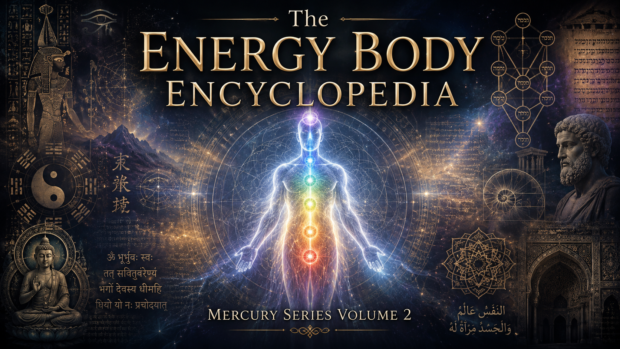
The Energy Body Encyclopedia: Mercury Series Vol. 2 – Free Download
The Energy Body Encyclopedia: Mercury Series Volume 2 Download Free Via the 3 Dots https://youtu.be/UrW9IR5u2DI?si=vzmNI-omPdHZkMOD Subscribe: Veiled Mystic The Energy Body Encyclopedia began with a question that was too large for a single chapter. Across history, cultures have described forces, layers, centers, channels, breaths, lights, soul-components, and invisible powers associated with the human person. Some of the names are familiar. Prana. Qi. Chakras. Aura. Kundalini. Mana. Others are rarely placed beside them: the Egyptian ka, the Yoruba ase, the Greek pneuma, the Tibetan lung, the Kabbalistic Sefirot, the Polynesian wairua, the Norse ond, the Sufi lataif, the Navajo nilch'i, and hundreds more. The Energy Body Encyclopedia, Mercury Series Volume 2, gathers 270 documented concepts from cultures around the world into one comparative reference work. The book is organized alphabetically, but it is meant to be read sideways as much as […]
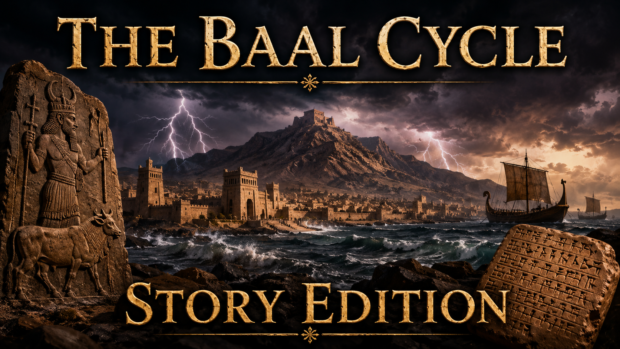
The Baal Cycle – Story Edition (Free Download)
https://youtu.be/l250zH13xYU?si=3H0iYUcJYB3P6mzR Subscribe - Veiled Mystic Download Free Via the 3 Dots. The Baal Cycle Story Edition: Our Free PDF and Video The Baal Cycle is one of the most important mythological works to survive from the ancient city of Ugarit. For this project, we created a story edition designed for listening. It follows the main sequence preserved on the six tablets known as KTU 1.1 through KTU 1.6, but it is not a word-for-word reproduction of any modern copyrighted translation. Instead, it is a fresh narrative adaptation written in clear English for text-to-speech narration and general readers. That distinction matters. The original Ugaritic poem is ancient, but modern English translations are often copyrighted. Our story edition therefore keeps the ancient characters, conflicts, order of events, and major images while using new wording. Where the clay tablets are broken, uncertain, or […]
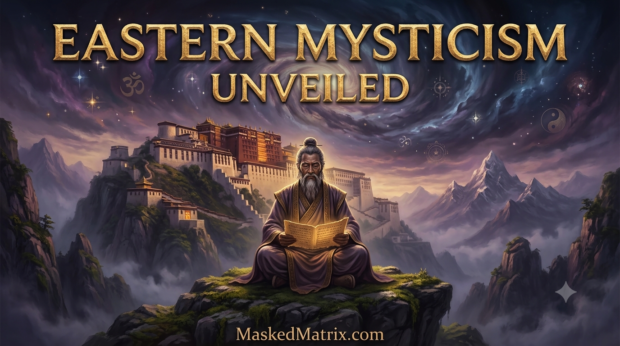
Eastern Mysticism Unveiled – Mercury Series Vol. 1 – Free Download
Eastern Mysticism Unveiled Download Free Via the 3 Dots. A New History of Eastern Mysticism The Old Magic is a new book that traces the real history of Eastern Mysticism, from its earliest ancient roots to the practices millions of people know today. The book follows one central idea. Every tradition covered in the book, including Qigong, Reiki, Yoga, and Tantra, grew from a shared river of human spiritual practice rather than from separate, isolated origins. This approach makes Eastern Mysticism easier to understand as a connected whole instead of a random collection of unrelated beliefs. The book takes a Reality Scientist approach to its subject. It does not ask readers to believe every claim on faith, and it does not dismiss ancient practice as mere superstition either. Instead, it separates documented history from popular legend, chapter by chapter, so […]
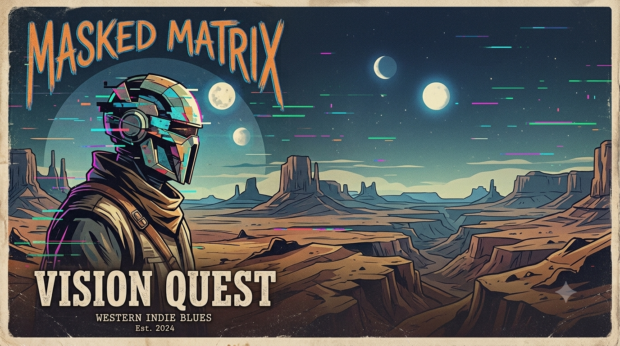
Vision Quest – By Masked Matrix – Full Album
Album: Vision Quest By - Masked Matrix Release Date: 7/17/26 1. The Rockhound 2.The Train Hoppers 3. Global Diet Plan 4. Desert Wanderer 5. Slab City Blues 6. Animal Nature 7. Miss The Bliss 8. The Invisible Fight Alone 9. Deadfall Trap 10. Cycle of Dukkha 11. Missed Time 12. Dirty Secrets 13. I've Fought Through Worse 14. Waiting for My Lotus Flower <Download Album Free Here> 1. The Rockhound [Verse] Dust on my boots stones in my pack Chasing the shimmer ain't no turning back The dirt and the sweat carve lines in my face Every mile I walk another treasure to chase [Chorus] I’m the rockhound digging deep in the ground No map no guide where the lost is found Through the wilderness over mountains I’ll roam I’ll find my fortune never call it home [Verse 2] Sun […]
Related
Mercury Rising – By Masked Matrix – Full Album
Album: Mercury Rising By - Masked Matrix Release Date: 8/20/26 1. NPC or just Dumb 2. Fracking Rediculous 3. Pineal Gland Peek-a-boo 4. Sia & Hu 5. Just Another Oil Spill 6. Artificial Consciousness 7. I'm Still Here 8. Angel Numbers 9. Flew too Close to the Sun 10. Tektites Transforming Me 11. Guardians of Greed 12. You're the One that's Crazy 13. Enki's Golden Apple 14. Spiritual Warfare 15. Elder Care 16. Perpetual War 17. Unified Future 18. Cotton Candy Clouds 19. Mass Hypnosis 20. Path of the Mystic 21. The Tunnel Dwellers 22. Remote Viewers <Download Album Free Here> 1. NPC or just Dumb [Verse] You walk the street like you're on rails Eyes glazed over like a ship with no sails Your words are scripts that never stray Is it the game or your […]
The Apocalypse of Abraham (Story Edition) – Free Download
The Apocalypse of Abraham Story Edition Download Free Via the 3 Dots https://youtu.be/vKUDkJEYBBc?is=wDK5PuvKEvuR4Pqo Subscribe: Veiled Mystic The Apocalypse of Abraham is one of those ancient works that can take a modern reader completely by surprise. It begins on a human scale. Abraham is still a young man living in the household of his father Terah. His father manufactures idols. Abraham sees stone gods break, wooden gods burn, and images supposedly capable of blessing human beings depend entirely on human hands to stand upright, survive accidents, or even exist. Then the story opens into something much larger. A heavenly voice calls Abraham away. An angel named Yahoel becomes his guide. The adversarial power Azazel appears. Abraham prepares the covenant sacrifice known from Genesis, but the familiar biblical scene becomes the doorway to a cosmic revelation. Abraham rises into the heavens. He […]
The Energy Body Encyclopedia: Mercury Series Vol. 2 – Free Download
The Energy Body Encyclopedia: Mercury Series Volume 2 Download Free Via the 3 Dots https://youtu.be/UrW9IR5u2DI?si=vzmNI-omPdHZkMOD Subscribe: Veiled Mystic The Energy Body Encyclopedia began with a question that was too large for a single chapter. Across history, cultures have described forces, layers, centers, channels, breaths, lights, soul-components, and invisible powers associated with the human person. Some of the names are familiar. Prana. Qi. Chakras. Aura. Kundalini. Mana. Others are rarely placed beside them: the Egyptian ka, the Yoruba ase, the Greek pneuma, the Tibetan lung, the Kabbalistic Sefirot, the Polynesian wairua, the Norse ond, the Sufi lataif, the Navajo nilch'i, and hundreds more. The Energy Body Encyclopedia, Mercury Series Volume 2, gathers 270 documented concepts from cultures around the world into one comparative reference work. The book is organized alphabetically, but it is meant to be read sideways as much as […]
The Baal Cycle – Story Edition (Free Download)
https://youtu.be/l250zH13xYU?si=3H0iYUcJYB3P6mzR Subscribe - Veiled Mystic Download Free Via the 3 Dots. The Baal Cycle Story Edition: Our Free PDF and Video The Baal Cycle is one of the most important mythological works to survive from the ancient city of Ugarit. For this project, we created a story edition designed for listening. It follows the main sequence preserved on the six tablets known as KTU 1.1 through KTU 1.6, but it is not a word-for-word reproduction of any modern copyrighted translation. Instead, it is a fresh narrative adaptation written in clear English for text-to-speech narration and general readers. That distinction matters. The original Ugaritic poem is ancient, but modern English translations are often copyrighted. Our story edition therefore keeps the ancient characters, conflicts, order of events, and major images while using new wording. Where the clay tablets are broken, uncertain, or […]
Eastern Mysticism Unveiled – Mercury Series Vol. 1 – Free Download
Eastern Mysticism Unveiled Download Free Via the 3 Dots. A New History of Eastern Mysticism The Old Magic is a new book that traces the real history of Eastern Mysticism, from its earliest ancient roots to the practices millions of people know today. The book follows one central idea. Every tradition covered in the book, including Qigong, Reiki, Yoga, and Tantra, grew from a shared river of human spiritual practice rather than from separate, isolated origins. This approach makes Eastern Mysticism easier to understand as a connected whole instead of a random collection of unrelated beliefs. The book takes a Reality Scientist approach to its subject. It does not ask readers to believe every claim on faith, and it does not dismiss ancient practice as mere superstition either. Instead, it separates documented history from popular legend, chapter by chapter, so […]
Vision Quest – By Masked Matrix – Full Album
Album: Vision Quest By - Masked Matrix Release Date: 7/17/26 1. The Rockhound 2.The Train Hoppers 3. Global Diet Plan 4. Desert Wanderer 5. Slab City Blues 6. Animal Nature 7. Miss The Bliss 8. The Invisible Fight Alone 9. Deadfall Trap 10. Cycle of Dukkha 11. Missed Time 12. Dirty Secrets 13. I've Fought Through Worse 14. Waiting for My Lotus Flower <Download Album Free Here> 1. The Rockhound [Verse] Dust on my boots stones in my pack Chasing the shimmer ain't no turning back The dirt and the sweat carve lines in my face Every mile I walk another treasure to chase [Chorus] I’m the rockhound digging deep in the ground No map no guide where the lost is found Through the wilderness over mountains I’ll roam I’ll find my fortune never call it home [Verse 2] Sun […]
Be the first to leave a comment